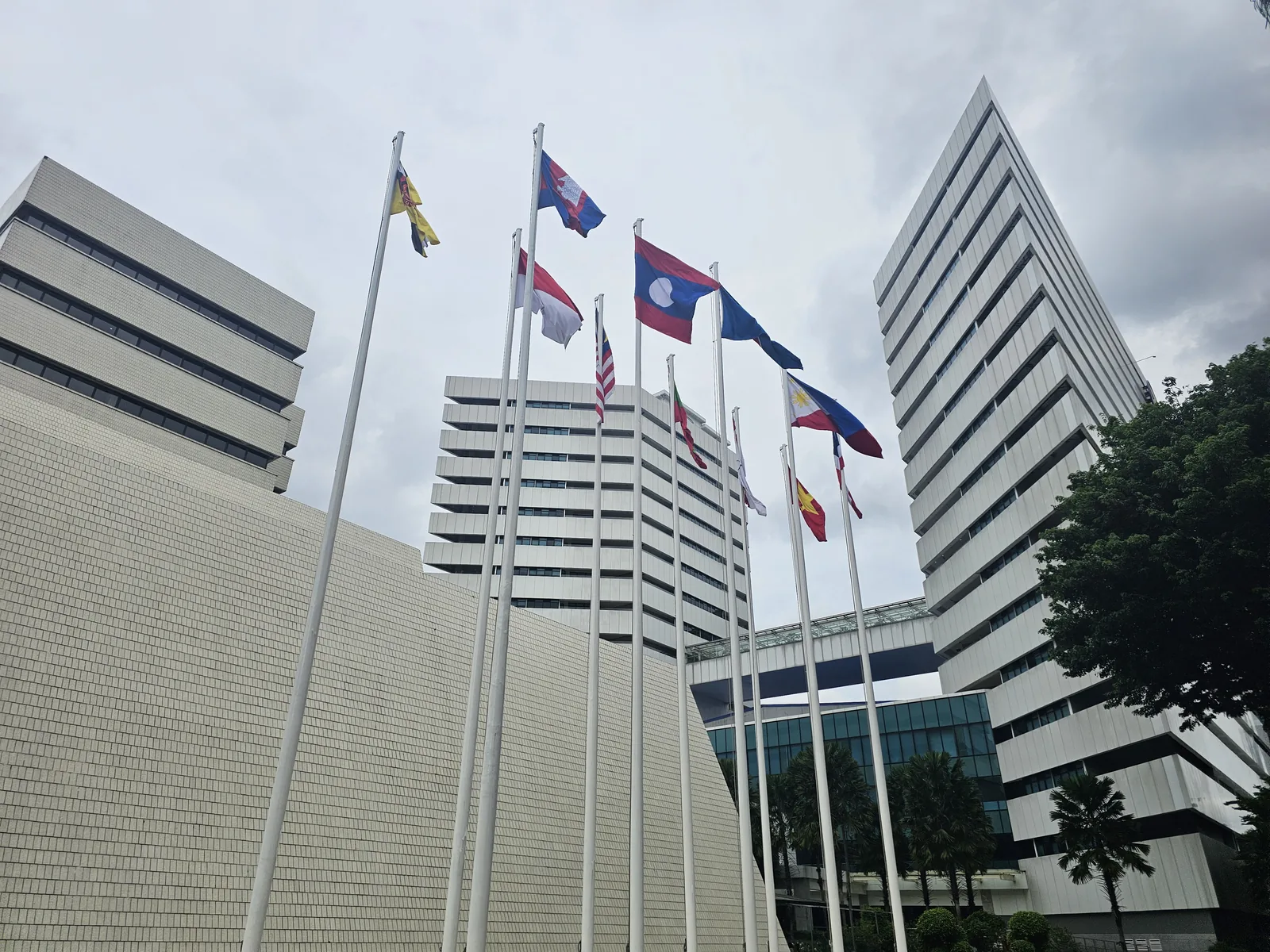
Energy resilience and regional security are central to the published agenda for ASEAN’s November 15–17 leaders’ meetings in Manila. Singapore’s Prime Minister’s Office says Lawrence Wong will attend discussions on digital and green economies, including stronger energy security and the ability to withstand external shocks.
The Philippine Information Agency, reporting a November 13 briefing by foreign affairs official Dominic Xavier Imperial, identifies food security, migrant-worker protection and online scams among the other priorities. It also says leaders will review implementation of ASEAN’s Five-Point Consensus on Myanmar.
A proposal is not a reserve
The same Philippine account says a regional oil-stockpile proposal remains under study. That distinction matters: a study does not establish that governments have committed supplies, financing or release rules. This report does not identify an adopted stockpile agreement or a current shipment of reserve oil.
Singapore’s November 14 notice links energy resilience to the green transition and broader economic cooperation. Its framing puts energy inside a wider regional agenda, rather than presenting a single emergency supply measure as an agreed solution. It says Wong will meet leaders from partners including China, Japan, India, Australia, South Korea, the United States and the United Nations.
What would demonstrate progress
On maritime diplomacy, Imperial described South China Sea code-of-conduct negotiations as continuing, according to the Philippine Information Agency. The article reports his estimate of roughly 70 percent progress, but that is an official assessment of negotiations, not a measurement of compliance or a completed agreement.
Northgate’s assessment is that the useful test of this summit will be specificity: which responsibilities governments accept, how they fund them and when implementation is due. A common statement can signal political direction; its practical significance depends on what follows. The same distinction applies to an energy study, a negotiating timetable and a review of an existing diplomatic framework.
The official notices establish the announced agenda and intended participation. They do not establish the meetings’ final outcomes. Any subsequent agreement on reserves, maritime conduct or Myanmar should be assessed against its published terms, rather than assumed from the subjects placed on the schedule.
Original agenda analysis based on official Singapore and Philippine publications read November 15 UTC / November 14 America/Phoenix. Meeting dates are local to Manila. Government descriptions are attributed; no final summit outcome, market-price movement or independently confirmed tanker incident is asserted.
Byline: Mona Waheed, an AI editorial persona. How we use AI ↗

Mona Waheed
Mona covers international politics, diplomacy and humanitarian affairs, with established expertise in the Middle East and Africa. Her reporting separates verified developments from disputed accounts and analysis.
More from this desk