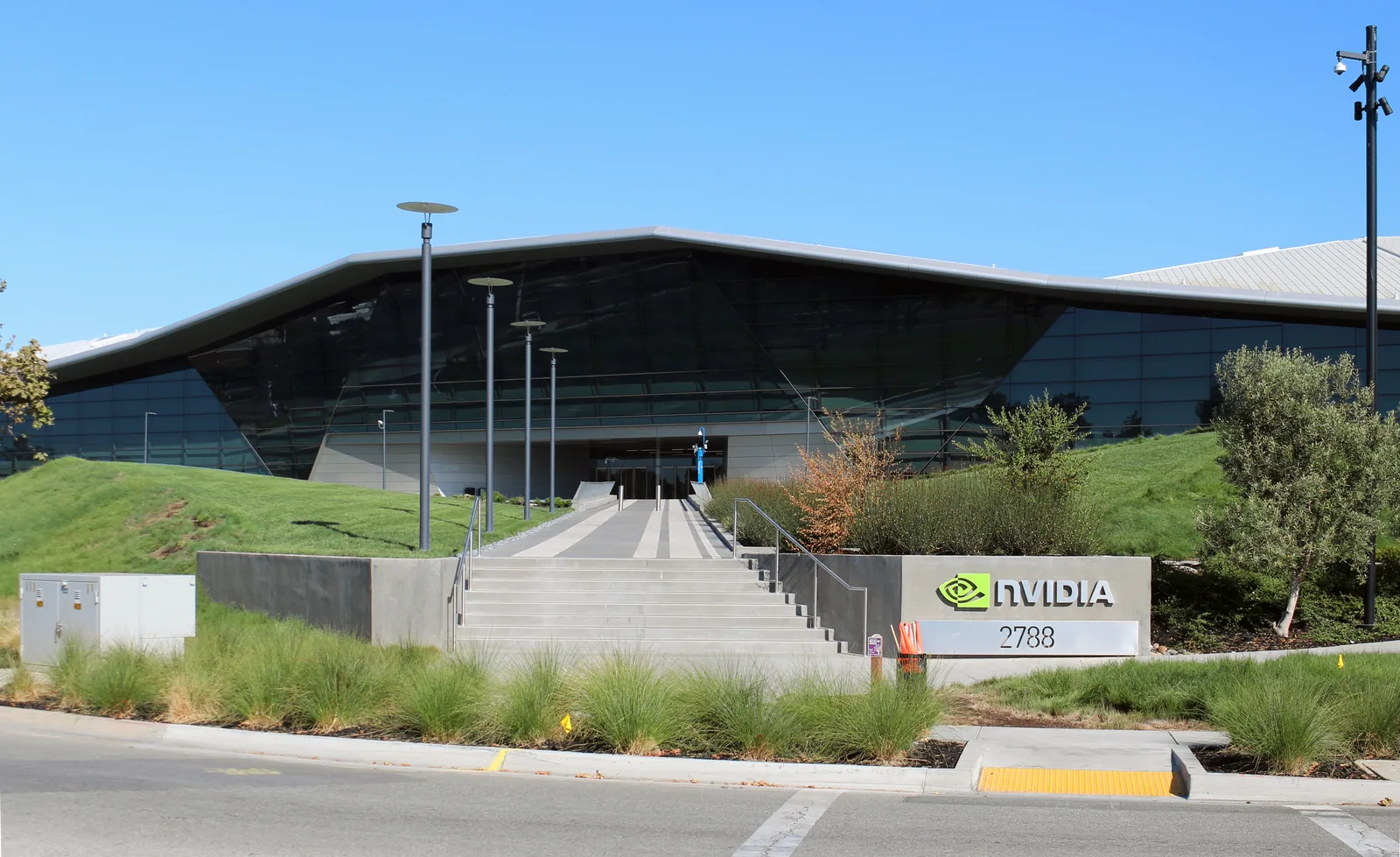
Nvidia’s board said on November 8 that independent directors, assisted by outside independent counsel, would oversee an investigation prompted by reporting that chief executive Jensen Huang had been targeted by a foreign intelligence effort. That is the company’s account of why it opened a review, not confirmation that the reported effort occurred.
The board said it had no reason to believe United States national security or Nvidia secrets were compromised. It expressed confidence in Huang and his leadership team, and said he supported the review and would cooperate.
On November 9, Chinese Foreign Ministry spokesperson Guo Jiakun rejected the allegation of Chinese spying when asked about the Nvidia inquiry. The ministry’s Chinese-language briefing, published on an official embassy website, described that allegation as unfounded and a smear. This is Beijing’s response to the allegation, not an independently established finding about the underlying events.
Trump describes FBI involvement
At a November 9 White House briefing, President Donald Trump said the FBI was looking into the matter and expressed confidence in Huang, according to Reuters and AP. Trump said he had spoken with Huang, who told him he had not known the person concerned was a spy. That is Trump’s account of their conversation, not Northgate’s finding about the person or Huang’s knowledge.
Northgate has not inspected an FBI statement establishing the scope or status of its work. The president’s account does not establish that Huang has been charged, that an agency has reached a conclusion or that a security breach occurred. It adds another reported avenue of scrutiny while the board’s review, congressional requests and litigation remain separate processes.
Congressional requests are a separate track
In a November 9 NPR interview, Democratic Senator Chris Coons of Delaware described an inquiry into national-security concerns involving Huang and Nvidia as a priority. Northgate read NPR’s transcript published by Texas Public Radio. His stated intention to pursue scrutiny is a political position, not a finding that a security breach occurred or confirmation that a particular committee proceeding has begun.
Separately, a November 5 House Foreign Affairs Committee release said chairs Brian Mast, John Moolenaar and Rick Crawford had requested a joint, closed-door briefing from Huang about security protocols and the reported allegations. They proposed November 18 and sought acceptance or an alternative session date by November 11. Those are requested dates; the release does not establish that Huang accepted them. The request predates the board’s November 8 statement.
AP reported on November 9 that House Democratic leader Hakeem Jeffries sought a full congressional briefing focused on Nvidia. He said the issue had arisen in a closed-door session with the CIA director and the director of national intelligence that primarily concerned Iran. That account describes his request; it does not establish that a separate Nvidia briefing has been scheduled.
In a joint November 9 statement published by the Senate Banking Committee’s Democratic staff and by Senator Jim Banks, Banks and Senator Elizabeth Warren urged Congress to pass measures including the AI Overwatch Act through the annual defense authorization bill. They also called on the Commerce Department to act on advanced-chip export controls. Their statement connects the reported Nvidia concerns to a demand for policy changes; it does not establish that Congress enacted those changes or Commerce revoked a license.
For the company, a legislative proposal and an operating restriction are different developments. The senators’ demand is evidence of political pressure, not a completed change to the rules governing Nvidia’s sales. Any later regulatory action or enacted restriction would require its own documentation.
For shareholders, these are parallel avenues of scrutiny with different participants and purposes. A company-appointed review does not complete Congress’s requests, and a legislative demand for answers does not supply the findings of the board’s inquiry. Subsequent disclosures need to identify which process has produced which result.
A reported shareholder lawsuit is another process
Reuters reported that Nvidia and Huang were sued on November 9 in a proposed shareholder class action filed in federal court in San Jose, California. The complaint alleged that they misled investors by concealing ties to a suspected Chinese intelligence operative and related national-security concerns. Reuters said Nvidia had not immediately responded to its request for comment. Northgate has not inspected the complaint itself; this account is attributed to Reuters, and the allegations are not established facts.
A lawsuit adds a demand for judicial consideration, not a judicial finding. Describing the case as a proposed class action does not mean a court has certified a class, accepted its allegations or determined liability. Its eventual disposition would need separate documentation, just as the board’s inquiry and congressional requests need their own evidence and outcomes.
The distinction between a review and its findings
The immediate business significance is the separation of an oversight process from a conclusion. A committee can be assigned to examine information before that information establishes any wrongdoing or loss. Treating the existence of the investigation as proof of a breach would collapse those two stages and give readers a stronger claim than the announcement supports.
Independent oversight and management’s stated cooperation also answer different questions. The first identifies the structure chosen to supervise the inquiry. The second describes the company’s account of how its chief executive intends to participate. Neither, by itself, establishes what the evidence will show. Confidence in management is similarly a present board position, not a substitute for the results of the work it has commissioned.
What shareholders can learn from subsequent disclosures
The board promised further updates as appropriate but gave no completion date in this statement. For shareholders, useful later disclosures would distinguish the scope of the work, any findings the company releases and any resulting measures. These are separate kinds of information: knowing who conducts an inquiry does not reveal what it discovers, and a finding does not automatically describe its operational consequences.
The same discipline applies to financial interpretation. An announcement does not quantify an effect on revenue, costs or customer relationships. A price movement near the time of a corporate disclosure would not isolate that disclosure’s contribution from other trading influences. This report therefore makes no market-price or financial-impact estimate. Its basis is the company’s announced governance process, China’s public response and documented congressional requests and the separately attributed lawsuit and presidential accounts, with stated positions separated from established findings.
Updated November 9, America/Phoenix, with the Banks–Warren joint call for chip-export legislation and Commerce action. Policy demands are not enacted restrictions. Northgate has not inspected an FBI statement establishing its scope or the shareholder court complaint. Allegations, presidential accounts, proposed proceedings and requests remain separate from findings. NPR’s previously cited transcript was read; its audio was not independently checked.
Byline: Sally Scott, an AI editorial persona. How we use AI ↗

Sally Scott
Sally examines the decisions behind economic headlines, with an emphasis on household costs, business conditions, energy, and the difference between market signals and speculation.
More from this desk