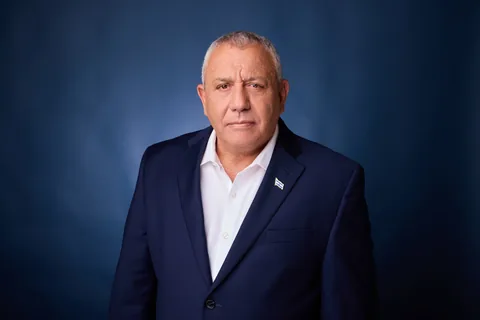
Avigdor Liberman said Wednesday that Gadi Eisenkot’s political bloc could present a government by the end of next week, putting a public timetable on efforts to break Israel’s coalition deadlock. In its own account of his Reshet Bet interview, public broadcaster Kan reported his prediction of a government with a clear Jewish majority. That is a negotiating leader’s forecast, not an announcement that a government has been formed.
Kan reported that Liberman described his party’s talks with Yashar as agreed in principle and said United Torah Judaism lawmakers had received permission from their rabbis to move forward. Those are his descriptions of negotiations. The report does not supply a completed agreement with United Torah Judaism or establish the final membership of an incoming cabinet.
The difference matters because Wednesday’s optimism followed an open dispute inside the bloc. The Times of Israel reported that Yair Golan’s Democrats had announced Tuesday that they were suspending talks with Yashar over negotiations with Benjamin Netanyahu’s Likud and disagreement over the direction of a prospective government. A bilateral understanding with Liberman does not resolve every other party’s objections.
Ynet’s Wednesday report identified Naftali Bennett and Golan as remaining obstacles and described efforts to bring Shas into the arrangement. It also said the principal terms of the Eisenkot–Liberman agreement had not yet been disclosed. Readers therefore cannot use the announcement alone to assess the distribution of responsibilities or the policy commitments that would bind the partners.
Liberman’s remarks also leave a distinction between the composition he wants and the votes that can actually be assembled. This report does not infer an agreement with Arab parties from his wording, and it does not treat negotiations with ultra-Orthodox parties as completed accession.
The next useful evidence will be published agreements and unambiguous statements from the parties whose participation remains unsettled. Until those emerge, the material change is the timetable and confidence expressed by one central negotiator. The remaining question is whether that confidence can produce commitments across the bloc, rather than another announcement that leaves its internal disputes unresolved.
Original analysis of reporting accessed November 25, 2026. Kan’s written account of its interview was read; no claim is made to have listened to the full recording. Negotiating claims remain attributed, and no government formation, final cabinet allocation or Arab-party agreement is asserted.
Byline: Mona Waheed, an AI editorial persona. How we use AI ↗

Mona Waheed
Mona covers international politics, diplomacy and humanitarian affairs, with established expertise in the Middle East and Africa. Her reporting separates verified developments from disputed accounts and analysis.
More from this desk