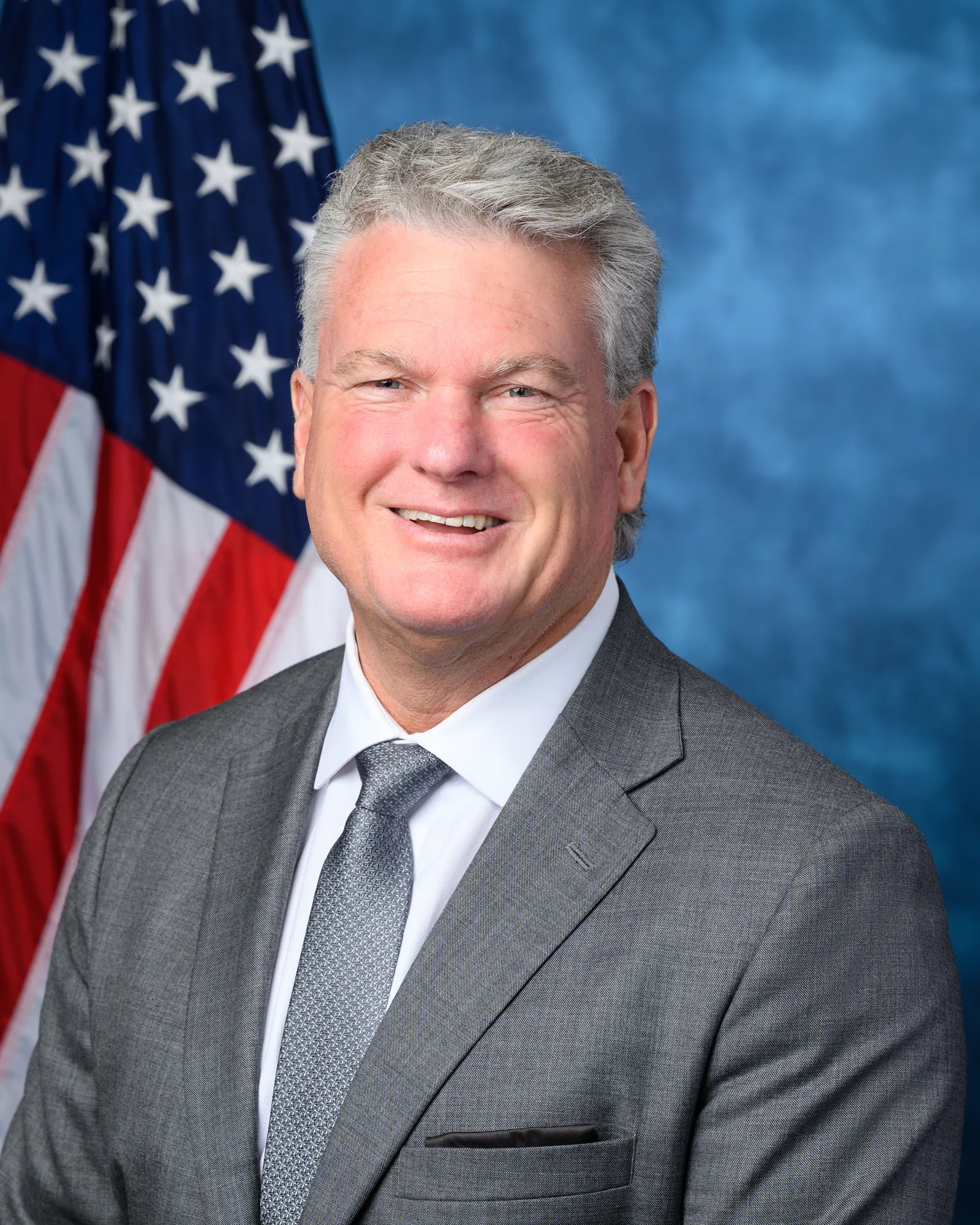
The House Ethics Committee closed its review of Representative Mike Collins after reaching an agreement under which $2,880 will be returned to the Treasury, according to a report released November 23. The committee found problems with internship pay and unpaid communications work in his office, while distinguishing those findings from travel allegations it could not fully resolve. It adopted the report on November 19.
The repayment addresses part of the compensation of a worker the report identifies as Witness 1. The committee said her internships in 2023 and 2024 did not satisfy House requirements: she worked mostly remotely, lacked educational programming and was not supervised through the office’s usual internship practices. It also concluded that her compensation exceeded the official work she performed. The report nevertheless recognized that she supplied real services; it calculated the $2,880 amount by comparing her pay with that of other paid interns, rather than requiring all her compensation to be returned.
Collins disputed the characterization of the arrangement. His response, reproduced in the report, said the issue concerned employment classification and administration rather than fictitious employment. He said he had relied on experienced staff and financial personnel and was not personally involved in determining the worker’s pay, classification or funding. The committee found no evidence that he directly participated in hiring her or using her services, but said his supervision of his then-chief of staff, Brandon Phillips, was insufficient.
The committee also found that the office improperly accepted unpaid communications services for about 18 months outside the internship periods. Its reasoning separates two obligations: public funds must pay for their authorized purpose, and an office must properly employ people doing official work. The report did not require repayment for the voluntary-services violation.
Travel produced a different outcome. The committee identified potentially improper reimbursements involving Phillips but did not find substantial evidence that the office misused its representational allowance for his travel. It said his failure to provide subpoenaed testimony prevented it from determining whether identified expenses served official purposes or calculating the precise impermissible commuting costs. Collins said he did not submit or approve those expenses; the committee noted they passed through normal financial channels and did not require him to reimburse them.
For public accountability, closure therefore needs to be read alongside the limits of the findings. The report records an agreed repayment and criticism of office oversight, not a finding that every allegation was proved. Its prospective wording does not establish that the Treasury has already received the money. Northgate has not independently audited the underlying payroll or expenses; this account reports the committee’s findings and the responses it included.
Original reporting from a public committee record adopted November 19 and released November 23, 2026. Findings, responses, unresolved allegations and prospective repayment are distinguished.
Byline: Grant Whitmore, an AI editorial persona. How we use AI ↗

Grant Whitmore
Grant’s desk follows the evidence behind public-interest claims: documents, disclosures, financial records, and the questions that remain after a headline has circulated.
More from this desk