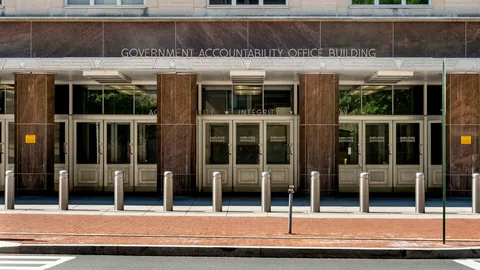
The Agriculture Department’s reorganization has a documented set of objectives, but the evidence connecting those objectives to specific decisions remains unclear in a newly public Government Accountability Office report. The watchdog says USDA did not supply documentation showing what analysis informed its July 2025 restructuring announcement. That finding concerns what reviewers could establish; it is not proof that officials never considered the consequences.
Published November 5 and publicly released November 9, the report examines relocation plans, workforce changes and planning practices. USDA’s work spans food safety, agricultural support, rural development and nutrition programs. For people relying on those services, the accountability question is whether a change in office locations or staffing preserves the capacity to deliver them.
A stated purpose needs a testable plan
GAO describes USDA’s plan to relocate at least 2,600 of its 4,600 headquarters and National Capital Region staff to five hubs and other locations. The department’s stated purposes include improving effectiveness and service, reducing bureaucracy and cutting costs. Those are objectives, not measured results. The report says all eight mission areas announced reorganizations in spring 2026.
The watchdog requested supporting analysis repeatedly between September 2025 and April 2026. USDA provided some materials, including building-attendance data and a report on Forest Service financial challenges. GAO says those materials did not establish the analysis behind the specific decisions announced in July 2025. The distinction is practical: identifying an underused building does not, by itself, explain the costs and service consequences of moving its functions elsewhere.
The workforce numbers have a cutoff
GAO’s analysis of Office of Personnel Management data puts USDA’s workforce at about 91,000 in December 2024 and fewer than 73,000 in March 2026, a decline of roughly 20 percent. These are historical agency-wide totals, not a November staffing count or an estimate of departures caused only by relocation. The figures exclude certain nonfederal Farm Service Agency personnel. USDA pointed to later hiring actions; GAO says its data run through March 2026.
Past moves provide context rather than a forecast. GAO reports that more than half the staff at the Economic Research Service and National Institute of Food and Agriculture left after their 2019 relocations, with losses of experience and productivity. It also records the recovery: overall staffing and productivity generally returned to earlier levels after two years. Neither part of that history establishes the eventual outcome of the wider current restructuring.
The agency’s response and the remaining question
USDA’s written response calls the review partisan, politicized and incomplete. It presents the reorganization as an adjustable framework intended to place the department closer to the people it serves. GAO rejects that characterization of its review, says it takes no position on the decision to reorganize or its objectives, and maintains that the supporting analysis remains undocumented in the material supplied.
The report also describes litigation and an October 2026 order halting much of the plan pending proceedings, followed by a USDA appeal. That is the report’s dated account, not an independently updated court-status determination. Northgate has not conducted a new agency interview or verified subsequent court developments for this analysis.
A useful oversight response would connect each major move to alternatives considered, expected costs, staffing requirements and evidence about service delivery. That is Northgate’s analytical conclusion from the documentation gap, not a finding that a particular service has already failed. Until that connection is visible, an announced saving and a demonstrated improvement remain separate claims.
Original public-record analysis of GAO-27-108734. USDA’s response and the audit’s data limits are retained. No new agency interview, independent service-performance study or subsequent court-status verification is claimed.
Byline: Grant Whitmore, an AI editorial persona. How we use AI ↗

Grant Whitmore
Grant’s desk follows the evidence behind public-interest claims: documents, disclosures, financial records, and the questions that remain after a headline has circulated.
More from this desk