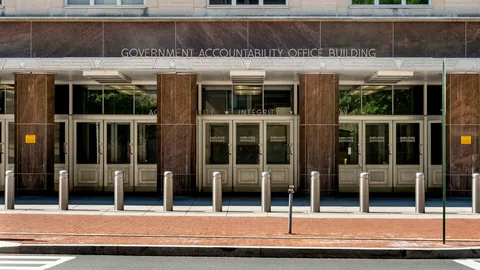
A Government Accountability Office report released November 6 identifies a narrow but consequential gap in State Department aid notifications: 36 of 37 sampled notices omitted information about the legal restriction that an exemption would overcome. All 37 referenced an exemption authority and described relevant programming.
The democracy-assistance audit examined these notices for fiscal 2023 and 2024 funding. The sample was selected from 64 notices meeting GAO’s criteria; it is not a count of every State aid notification. GAO recommends guidance addressing congressional reporting criteria and identifying specific activities covered by exemptions.
State’s written response, reproduced with the report, rejects additional uniform guidance. The department says its legislative-affairs bureau already provides continuing guidance, and decisions about notification content and timing reflect the facts of each case, applicable annual legal requirements and internal congressional-relations considerations.
The underlying 2024 appropriations law helps explain why the missing information matters. Section 7032 authorizes specified democracy-program funding despite other legal provisions. Its definition encompasses elections, independent media, civil liberties, human rights, accountable institutions and other democratic capacity. The exemption is a congressional funding authority, rather than evidence by itself that an agency has acted improperly.
A separate provision, section 7015(c), addresses what Congress must be told. For notifications submitted under subsection (f), it requires information about use of an exemption when that information is known at transmission. Section 7015(f) separately covers assistance to a named list of countries. Reading the authority and notification provisions together distinguishes permission to fund a program from the obligation to explain the planned use of that permission.
GAO says the missing restriction details were directed by the explanatory statements accompanying the 2023 and 2024 laws. It maintains that guidance can accommodate changing annual criteria and individual circumstances. The dispute therefore concerns how State should ensure consistent information reaches Congress, not whether every notice must contain identical language.
For oversight, the practical question is whether a reader can connect three things: the proposed activity, the legal barrier and the authority used to overcome it. Naming only an exemption leaves that chain incomplete. Naming the displaced restriction allows lawmakers to ask why the exception is appropriate for the particular spending proposal.
This is a review of a published audit and the governing statutory text, not an independent examination of State’s underlying notification archive. The findings support scrutiny of disclosure practices. They do not, on their own, establish diverted funds, unlawful spending or misconduct by a named official.
Public-records analysis of records retrieved November 7, 2026. GAO’s report was released November 6. No direct agency contact or independent inspection of the underlying notification archive.
Byline: Grant Whitmore, an AI editorial persona. How we use AI ↗

Grant Whitmore
Grant’s desk follows the evidence behind public-interest claims: documents, disclosures, financial records, and the questions that remain after a headline has circulated.
More from this desk