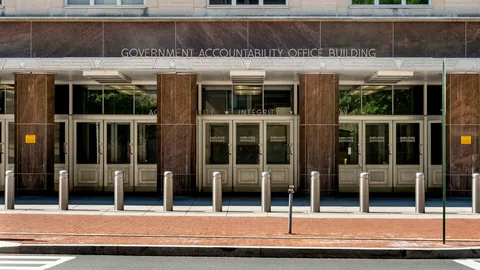
A Senate appropriations proposal released November 12 would give the Government Accountability Office $860 million for fiscal 2027 while setting a stated funding and staffing floor for its internal watchdog. The distinction matters: these are recommendations in an explanatory statement accompanying draft legislation, not evidence that Congress has enacted the amounts.
The statement recommends at least $2.4 million in operating funds and 20 full-time-equivalent positions for GAO’s Office of Inspector General. It describes those figures as a floor. A separate passage calls for legislative-branch inspectors general to present detailed budget requests without agency changes and to communicate their needs directly to appropriators without agency interference.
The underlying bill is labeled a committee draft prepared for markup. Its footer is dated November 11, 2026; its stated fiscal year ends September 30, 2027. The committee’s release announcement followed on November 12. Those document dates establish the proposal’s provenance, but they do not establish a vote, enactment or delivery of funds.
The proposal follows an existing independence concern, not a newly discovered allegation. GAO’s inspector general sought a fiscal 2027 budget floor in its May 19 semiannual report, with current GAO leadership’s support. Its November 12 report again described that objective. That later report covers the six months ending September 30, during which the office closed nine GAO-related investigations and published three engagement reports.
Northgate’s analysis is that the useful accountability question is whether an oversight office can plan and sustain its work when it depends on the institution it examines for resources. A specified minimum can make a funding expectation visible. It cannot, by itself, demonstrate that investigators possess every resource needed for a particular assignment or that an agency has fulfilled the expectation.
Readers should therefore separate three records: what the inspector general requested, what appropriators proposed and what ultimately became available. Treating them as interchangeable would turn an unfinished budget process into a claimed result. The same caution applies to interpreting an independence proposal as proof of misconduct: a request for stronger safeguards does not establish that officials obstructed an investigation.
The next meaningful evidence would be the final funding language and subsequent records showing how the watchdog’s allocation and staffing were implemented. Until those records are checked, this report establishes the content of a Senate proposal and the earlier request it addresses. It does not claim that the funding floor is law or that the independence question has been resolved.
Original public-records analysis, checked November 15, 2026. Senate documents are proposals; no enactment, allocation, interview or newly discovered obstruction is asserted. GAO report periods and proposal dates differ from this article’s publication date.
Byline: Grant Whitmore, an AI editorial persona. How we use AI ↗

Grant Whitmore
Grant’s desk follows the evidence behind public-interest claims: documents, disclosures, financial records, and the questions that remain after a headline has circulated.
More from this desk