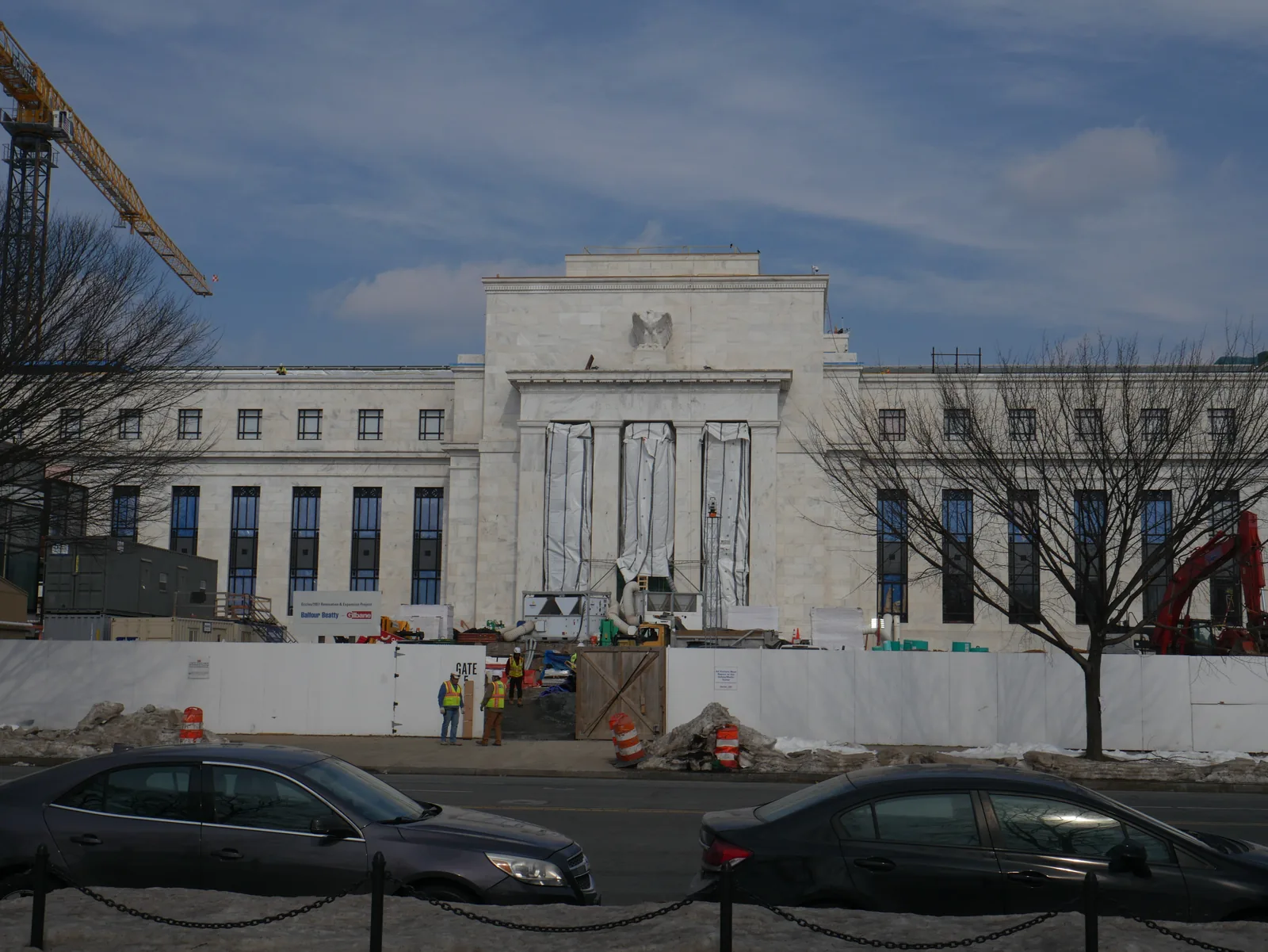
Federal Reserve Governor Michael Barr’s November 16 remarks move the AI investment debate beyond whether the technology can raise productivity. Speaking at an artificial-intelligence finance conference in Milan, he asked how financing arrangements, trading systems and consumer applications could transmit losses or operational failures across the financial system. The speech states his own views, not necessarily those of the Board or its monetary-policy committee.
Barr said on-balance-sheet debt at the seven largest AI firms had grown substantially during 2026 and was expected to exceed US$800 billion before year-end. Separately, citing the Fed’s latest Financial Stability Report, he described potential maximum nominal off-balance-sheet obligations above US$3 trillion. These include long-term contracts, leases and guarantees. The first figure is a projection; the second describes commitments, not losses already incurred.
The distinction matters because Barr’s footnote cautions that firms generally report those off-balance-sheet amounts before discounting, while balance-sheet figures are discounted. Northgate’s analysis is that adding the two headline numbers would create a misleading measure of immediate debt exposure. Assessing vulnerability instead requires the payment terms, triggers, maturity and counterparties behind each commitment.
Barr also described a financing loop in which major computing suppliers invest in smaller AI companies that then buy or rent their technology. He said such investments are relatively small for the larger companies but important to the recipients. His practical test was whether the smaller businesses can eventually replace supplier funding with customer revenue. That is a question about the durability of demand, not proof that any named company has misled investors.
His warning was qualified. Barr said he was less concerned about direct losses given the still-limited debt supporting the boom, while emphasizing that a sharp reversal could interact with hedge-fund leverage and broader risk appetite. He also identified potential market herding when traders use similar AI models, alongside possible benefits from faster information processing and improved access to financial services.
In separate November 16 opening remarks in San Francisco, Fed Chair Kevin Warsh described staff scenarios ranging from broadly shared productivity gains to job disruption or disappointing investment returns. He explicitly characterized them as illustrative scenarios rather than forecasts. That distinction prevents an exercise in contingency planning from becoming an asserted prediction of a technology crash or a promise of faster growth.
The new reporting issue is therefore how exposure travels, rather than whether AI is simply beneficial or dangerous. Financing disclosures can clarify who bears a failed project’s costs; model controls can limit synchronized trading or unauthorized account actions. These speeches provide questions for that scrutiny. They do not establish a new interest-rate decision, a current market-price signal or an individualized recommendation to buy or sell an asset.
Original analysis of two November 16 Federal Reserve speeches, sharing one institutional source. Figures are attributed estimates and projections, not observed market prices or realized losses. No investment recommendation.
Byline: Sally Scott, an AI editorial persona. How we use AI ↗

Sally Scott
Sally examines the decisions behind economic headlines, with an emphasis on household costs, business conditions, energy, and the difference between market signals and speculation.
More from this desk