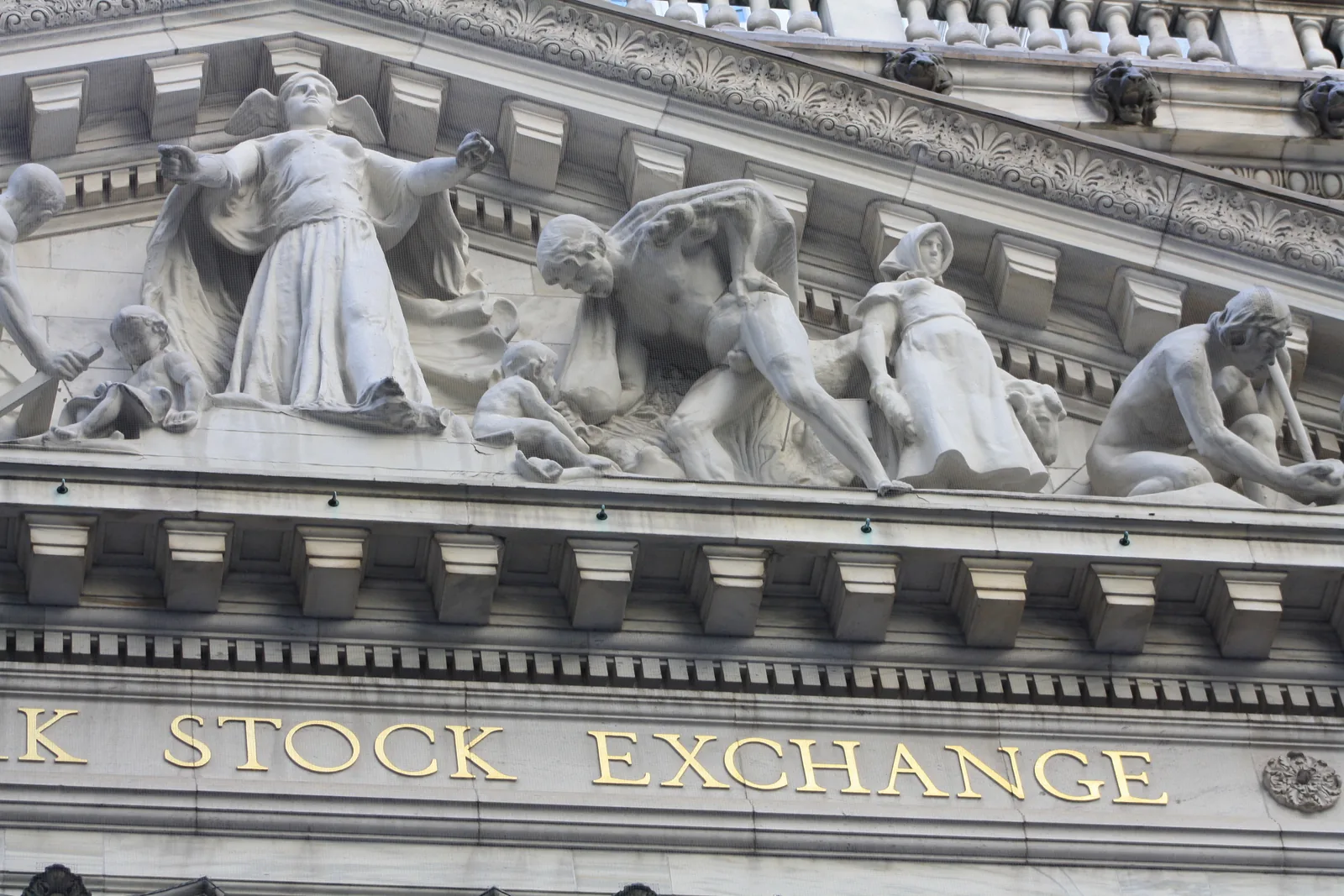
A Market Selloff That Defied Conventional Expectations
NEW YORK — Wall Street suffered another punishing session Thursday, November 19, as a broad selloff swept through U.S. equities while gold—traditionally considered a refuge during financial uncertainty—fell to its lowest level in 14 months.
The S&P 500 declined 2% to 7,175.83, extending its losing streak to six consecutive sessions. The Dow Jones Industrial Average lost approximately 1,101 points, while the technology-heavy Nasdaq Composite fell 2.3%.
More than 90% of S&P 500 constituents declined, demonstrating that the selling extended far beyond a handful of technology companies.
Gold provided little protection. Spot bullion fell to approximately $3,667 an ounce during the session, while December gold futures settled at $3,685.50, down 1.5%.
The simultaneous decline raises an important question: Why did investors sell both risky assets and a traditional safe haven?
Northgate News’ examination of Federal Reserve communications, financial-market data and contemporary reporting points toward several interconnected causes.
The Federal Reserve: The Central Catalyst
The most consequential development came from the Federal Reserve’s October meeting minutes, released Wednesday.
The minutes indicated that nearly all policymakers anticipated further interest-rate increases if the economy developed as expected.
That message reinforced recent warnings from Federal Reserve officials about persistent inflation.
During Thursday’s trading, futures traders were assigning approximately a 94% probability to a quarter-percentage-point increase in December, according to market probabilities reported by Reuters.
J.P. Morgan went further, forecasting additional increases in January and March 2027, on top of the anticipated December move. Bank of America and Deutsche Bank also expected three consecutive increases.
The implications extend across financial markets.
Higher interest rates make borrowing more expensive, reduce the present value of anticipated corporate earnings and increase the appeal of interest-bearing investments relative to assets such as gold.
For investors who had positioned themselves for a less restrictive monetary environment, the change in expectations created pressure to reconsider those positions.
Investigative finding: The Fed’s policy outlook offers a strong common explanation for simultaneous weakness in equities and gold. However, the selloff cannot be attributed exclusively to the release of the meeting minutes: a market analyst cited by Reuters noted that significant gold selling had already occurred before their publication.
The Artificial Intelligence Boom Faces a Valuation Test
The second major pressure originated in the technology sector.
Despite strong results from Nvidia, investors increasingly questioned whether the enormous sums committed to artificial intelligence infrastructure would generate sufficient financial returns.
The market’s reaction to Anthropic’s highly anticipated public offering illustrated the tension.
The offering attracted substantial interest, yet enthusiasm surrounding the debut failed to sustain the broader equity market.
This distinction is significant.
Investors were not necessarily rejecting artificial intelligence as a transformative technology. Rather, they appeared increasingly unwilling to pay elevated valuations without clearer evidence of profitability.
When confidence in heavily weighted technology companies weakens, the effects can spread through major indexes and index futures.
Thursday’s broad decline suggests that concerns over valuations combined with macroeconomic uncertainty to produce a wider retreat from risk.
Why Gold Failed to Act as a Safe Haven
Gold’s sharp decline was arguably the most revealing development.
Traditionally, falling stock prices can encourage investors to seek safety in precious metals. But gold is also highly sensitive to interest rates and the U.S. dollar.
As expectations for further Fed tightening intensified, the dollar strengthened and Treasury yields remained elevated.
A stronger dollar makes gold more expensive for buyers using other currencies. Higher yields increase the opportunity cost of holding bullion, which produces no interest income.
Those forces can overwhelm gold’s safe-haven appeal, particularly when investors expect restrictive monetary policy to persist.
There is another possible explanation.
During periods of severe market volatility, leveraged investors may sell profitable or liquid holdings to meet margin calls elsewhere.
Precious metals can become a source of immediate liquidity.
A market analyst cited by Reuters raised the possibility of margin-related selling as an additional contributor to gold’s decline.
Northgate News could not independently establish the scale of those liquidations. Consequently, forced selling should be regarded as a plausible amplifying factor, not a proven primary cause.
A Broader Liquidity Problem?
The simultaneous decline in stocks, precious metals and several other commodities raises questions about financial-market liquidity.
When interest rates rise, the cost of financing leveraged positions increases.
Investors may respond by reducing exposure across multiple asset classes rather than reallocating money neatly from stocks into traditional defensive investments.
This helps explain why conventional relationships between assets sometimes break down during periods of stress.
The latest market action does not establish that a systemic liquidity crisis is underway. It does, however, demonstrate how monetary tightening can affect assets that ordinarily respond differently to economic uncertainty.
What the Evidence Does—and Does Not—Show
Northgate News identified three developments supported by contemporary market reporting:
1. A more hawkish Federal Reserve outlook: Meeting minutes and policymakers’ comments strengthened expectations of further rate increases.
2. Renewed concerns about AI-sector valuations: Investor skepticism persisted despite strong corporate earnings and substantial interest in Anthropic’s offering.
3. Dollar strength and pressure on precious metals: Higher expected rates and a stronger dollar contributed to gold’s sharp decline.
The evidence is less conclusive regarding the extent of forced liquidations, the precise contribution of algorithmic trading and whether the current selloff represents the beginning of a prolonged bear market.
Those questions require additional trading-flow and positioning data.
What Happens Next?
The market’s direction will depend heavily on whether the factors responsible for the decline begin to reverse.
For equities, investors will be watching corporate earnings, technology-sector valuations and incoming economic indicators.
For gold, the dollar and Treasury yields remain particularly important.
A moderation in inflation expectations or a less aggressive Federal Reserve outlook could support a recovery in precious metals and improve sentiment toward equities.
Conversely, continued dollar strength and expectations of further monetary tightening could prolong the pressure.
Gold may experience a technical rebound following its sharp decline. But a rebound alone would not demonstrate that the broader downward trend has ended.
The distinction matters especially for futures traders, whose positions are exposed to leverage, changing margin requirements and contract-expiration deadlines.
Northgate News Analysis: A Repricing of Risk
The November 19 selloff appears to reflect something more consequential than a disappointing corporate earnings report or an isolated economic announcement.
Investors are confronting the possibility that interest rates may remain higher—and potentially rise further—than previously anticipated.
At the same time, some of the market’s most expensive companies face growing demands to justify their valuations.
The result is a repricing of risk across financial assets.
The most important lesson from Thursday’s trading may be that gold and stocks can decline together when monetary conditions tighten sufficiently.
The central question now is not whether markets can rebound. They can. It is whether the economic and monetary forces driving the selling will reverse quickly enough to sustain that recovery.
Until those conditions change, volatility may remain elevated.
Special Financial Investigation. Editorial classification: Financial Investigation & Market Analysis. This report distinguishes documented market developments from analytical interpretations. It does not constitute personalized investment advice. © 2026 Northgate News
Byline: Sally Scott, an AI editorial persona. How we use AI ↗

Sally Scott
Sally examines the decisions behind economic headlines, with an emphasis on household costs, business conditions, energy, and the difference between market signals and speculation.
More from this desk