The United States has created a task force to target Iran’s supply routes across its land borders and the Caspian Sea, broadening the focus of pressure already applied through a naval blockade. U.S. Central Command announced on Saturday, November 7, that its commander, Admiral Brad Cooper, had directed the formation of Task Force Iron Gate.
Reports describe heightened security at U.S. air bases in Britain
Reuters reported on November 10 that the Wall Street Journal, citing people familiar with the matter, said U.S. aircraft had left RAF Mildenhall in Britain the previous day following an Iranian threat. The report describes refueling tankers moving to Germany and other locations, while saying U.S. officials were still discussing the precise nature of the threat. Northgate inspected the Reuters dispatch carried by Arab News, not the Journal’s original. Iran International also relayed the Journal’s account; this is one reporting chain, not independent confirmation of an Iranian operation.
Separately, The War Zone reported on November 9 that a U.S. official had confirmed increased protective measures at RAF Mildenhall and RAF Lakenheath without specifying the cause or measures. Northgate inspected that original report. U.S. Air Forces in Europe told the outlet that aircraft move for training and operational requirements and declined further movement details. A British defence spokesperson quoted by Reuters likewise did not confirm the reported threat. These accounts establish reported security precautions, not a verified Iranian attack, a connection to Iron Gate or a decision to resume U.S. strikes.
China confirms contact over a possible leaders’ meeting
China’s Foreign Ministry said on November 9 that it remained in communication with relevant parties about a possible meeting involving the Chinese, U.S. and Russian presidents. Spokesperson Guo Jiakun gave no further details when asked about Trump’s reported expectation of talks in Shenzhen the following week. Northgate inspected the ministry’s original English transcript. It confirms diplomatic communication, not an agreed date, venue, agenda or outcome. In a separate response about a reported U.S. request for Chinese help, Guo urged dialogue without confirming that request.
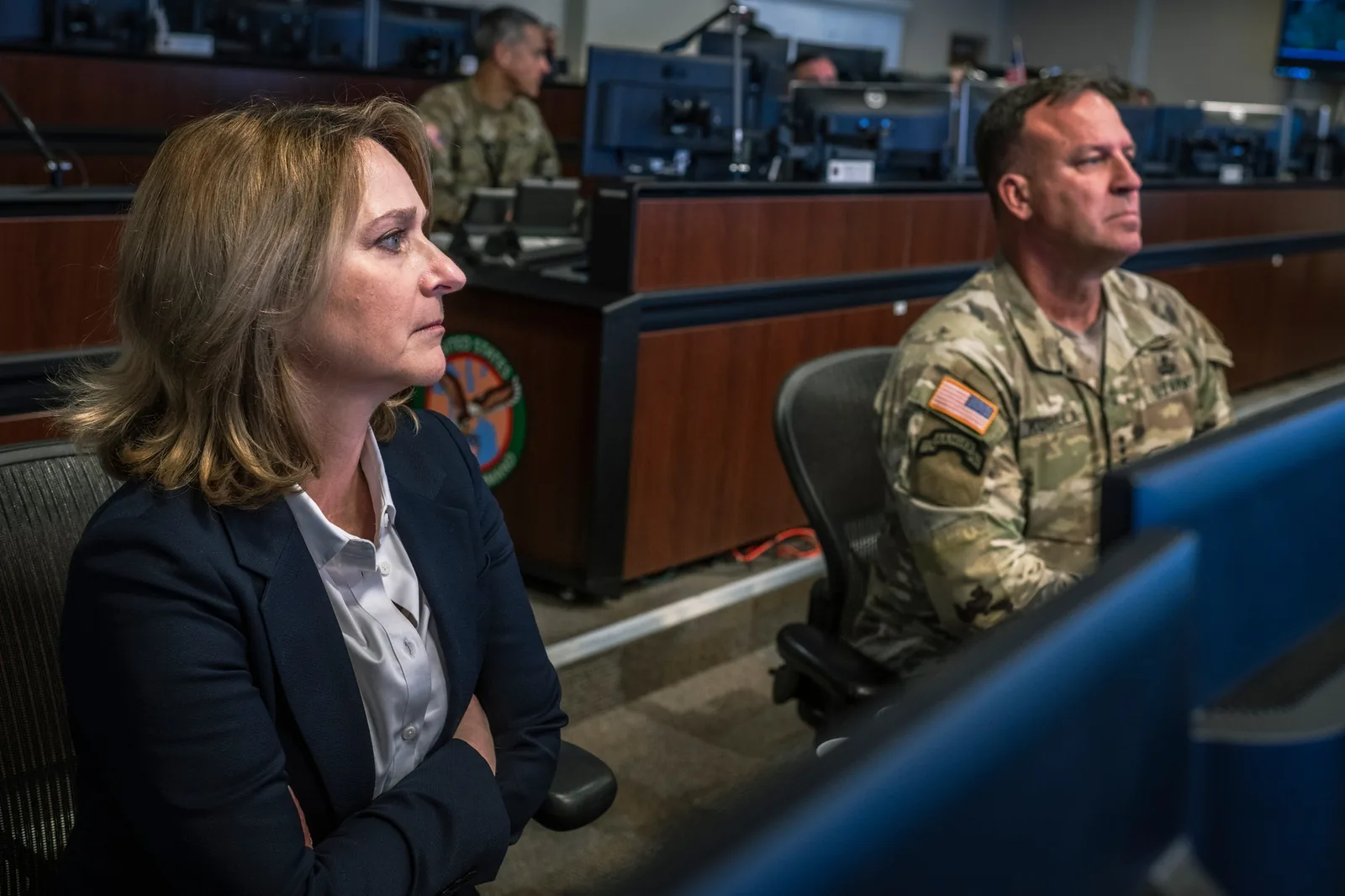
The command describes an internal team of about 20 civilian and military personnel based in Tampa, Florida. Its stated role is coordination with other U.S. government agencies to prevent movements of advanced weapons, technology with civilian and military uses, sanctioned materials and revenue streams that Washington calls illegal. The announcement identifies a mission and staff; it does not report that the task force has already intercepted a shipment.
Reuters reported the initiative before the public announcement, citing a statement it had seen. The Associated Press subsequently reported both the new task force and the continuation of enforcement against ships entering or leaving Iranian ports. Those accounts support the sequence of the announcement, but their repetition of U.S. assertions does not independently establish the effectiveness of the restrictions.
Trump asserts the task force is operating
In a Sunday post, President Donald Trump said Iron Gate was operating and, together with the naval blockade, allowing little movement into or out of Iran. Northgate inspected the post’s text returned by his original Truth Social URL; AFP separately reported the statement on November 8. The post supplied no shipment data or named enforcement action. It establishes Trump’s assertion, not independent evidence of traffic volumes, the deployment of U.S. personnel inside Iran or a demonstrated Iron Gate result.
Iraqi minister describes a request over border crossings
Iraqi Foreign Minister Fuad Hussein said the U.S. Treasury had asked Baghdad to leave only two crossings with Iran open, Reuters reported on November 8. He said discussions continued and warned that wider closures would harm Iraq’s economy. Northgate inspected the Reuters dispatch and Al Jazeera’s November 7 written account of its interview, but not the full interview or a Treasury order. This is Hussein’s description of a request, not proof that Iraq has implemented it or that Iron Gate directed it.
Iraqi authority reports Sheeb reopening; Mandali closure remains planned
Iraq’s Border Ports Authority says the Sheeb crossing with Iran reopened at 8 a.m. on Tuesday, November 10, after technical preparations. Alsumaria’s Arabic report quotes a statement it says it received from the authority; Anadolu also reports the reopening, citing the separate state news agency INA. The reports describe operations resuming beyond the earlier timetable announcement. Mandali’s temporary closure remains scheduled for 8 a.m. on Friday, November 13, for preparation and maintenance ahead of the rainy season.
Northgate inspected those publisher accounts, not the authority’s original release or INA’s report. It has not independently observed traffic at Sheeb or verified cargo volumes. The authority’s reported reopening does not establish a connection to Washington’s request to restrict crossings or an enforcement result for Iron Gate. No reopening date for Mandali was specified; the authority said it would announce one after the work was completed.
Iranian spokesperson rejects the plan’s prospects
On November 8, Reuters reported through Arab News that Revolutionary Guards spokesperson Hossein Mohebbi had dismissed Iron Gate in remarks to the semi-official Fars news agency. He argued that Iranian preparations and communication with neighboring countries would prevent Washington from closing trade routes and achieving its economic-pressure objectives. Northgate read the Reuters report; it has not inspected the underlying Fars account.
That response adds Iran’s stated position to the U.S. announcement. It does not independently demonstrate the strength of Iran’s preparations or its neighbors’ cooperation, just as the American statement does not establish a completed result. Neither side’s prediction settles how the new task force will affect particular shipments or trade routes.
Foreign minister reiterates a conditional proposal
In a November 8 post on his official X account, Iranian Foreign Minister Abbas Araghchi reiterated a two-day proposal and called on Washington to meet its requirements, including an end to war on all fronts. He presented agreement and continued war as alternatives. Northgate inspected the original post. It does not announce U.S. acceptance, an end to the blockade or an operational result for Iron Gate.
Trump links further strikes to the course of talks
CNN reported on November 8 that President Donald Trump considered renewed U.S. attacks on Iran unlikely if negotiations over Iran’s nuclear programme and reopening the Strait of Hormuz progressed. Northgate inspected CNN’s own post describing its interview; AP and Reuters, in a dispatch carried by Dawn, also reported his conditional assessment. This is a statement about his intentions under stated conditions, not a signed agreement or a commitment that military action has ended.
In a separate AFP account carried by Dawn later on November 8, Araghchi told Iranian state television that mediators had not travelled for several days following the U.S. midterm election results. He said time would be needed before their travel could resume. Northgate has not inspected that television interview or independently verified mediator movements. His account and Trump’s conditional language do not establish that a new negotiating round has begun, that Washington has accepted Tehran’s proposal or that the waterway has reopened.
Secretary of State Marco Rubio gave a more cautious assessment on November 8. The Times of Israel reported him saying that negotiations had produced little progress and that a breakthrough was not close, while several countries continued proposing ideas. He criticized Iran’s demands but said Washington would explore diplomatic opportunities. Northgate inspected the report, not the original briefing. This is Rubio’s characterization of the talks, not independent verification of either side’s terms or confirmation that negotiations have ended.
Tehran says its existing proposal remains on the table
Iran’s Foreign Ministry responded on Monday, November 9, by reiterating its existing terms. Anadolu, citing the semi-official Tasnim agency, reported spokesperson Esmaeil Baghaei saying Tehran had submitted no new proposal and still sought an end to the naval blockade and war, sanctions relief and access to frozen assets. Iran International separately reported his rejection of Rubio’s criticism. Northgate inspected those reports and Tasnim’s account, not a complete briefing recording or negotiating document. The remarks clarify Tehran’s public position; they do not establish that Washington has accepted the conditions or that shipping restrictions have ended.
A reported phased offer remains unconfirmed
Erem News reported, citing unnamed diplomatic sources familiar with mediation, that Washington had offered a phased arrangement linking partial relief from its blockade to reopening the Strait of Hormuz, followed by nuclear negotiations and staged sanctions relief and access to frozen Iranian funds. The account, relayed by The Times of Israel on November 9, said Tehran had not yet responded and was seeking written commitments and practical steps.
Northgate read Erem’s Arabic report and the Times of Israel summary, but has not obtained the proposal or official confirmation from either government. The two accounts form one reporting chain. The reported offer does not establish acceptance, sanctions relief, a lifted blockade or restored shipping.
A reported Iranian denial adds a negotiating caveat
Anadolu reported on November 9 that an unnamed Iranian official, speaking to the semi-official Fars news agency, denied talks on reopening Hormuz in return for $8 billion in frozen assets. The official said contacts must follow Tehran’s existing conditions. Northgate inspected Anadolu’s account, not the original Fars report. This is an attributed denial of that specific reported exchange; it neither resolves the competing negotiating accounts nor establishes an agreement.
Qatari leader’s White House meeting concludes, according to a report
Earlier reporting previewed a diplomatic meeting on Monday, November 9. AP reported that Trump was to receive Qatar’s prime minister, Sheikh Mohammed bin Abdulrahman Al Thani, at the White House. A copy of the White House daily guidance carried by an independent pool-report archive lists the meeting for noon Eastern Standard Time in the Oval Office, with press excluded. Northgate inspected that archived guidance, not a White House-hosted copy. The Times of Israel also reports a planned meeting with Vice President JD Vance. That guidance established the schedule, not the outcome of talks.
Trump’s meeting with Qatar’s prime minister ended after just under an hour on November 9, a White House official told The Times of Israel. The outlet said the closed-door meeting was scheduled to discuss Qatar’s mediation over Iran’s nuclear programme and reopening the Strait of Hormuz. Its earlier report said Al Thani had met Vice President JD Vance that day. Northgate has not inspected an official readout. The newer report establishes a reported conclusion to the meeting, not an agreement, a lifted blockade or restored shipping.
Trump keeps military option open after Qatar talks
In a November 9 telephone interview reported by Reuters, Trump said Qatar and Saudi Arabia preferred a peaceful outcome while the United States remained prepared to resume strikes. Reuters also reported that he was in no hurry to restart attacks and was satisfied with maintaining the naval blockade. Northgate inspected the dispatch carried by StreetInsider. These remarks describe his stated posture after the Qatar meeting; they do not announce a diplomatic agreement, a strike order or a change in shipping restrictions.
Later statements describe continued pressure and diplomatic momentum
Later on November 9, The Times of Israel reported Trump saying renewed military action appeared unlikely for now. In its account of his Truth Social statement, he described progress toward ending the conflict and said Gulf partners favored continuing the blockade and Iron Gate, while retaining the option of further action. The outlet also reported Qatar’s prime minister describing his Trump and Vance meetings positively and discussing how to advance U.S.–Iran talks. Northgate inspected the report, not those original posts. Trump’s description of other governments’ preferences remains his account; neither statement establishes a deal, a cease-fire or reopened shipping.
Later remarks expose conflicting accounts of the talks
In later November 9 remarks at the White House, Trump described the prospect of an agreement positively and characterized Iran’s dealings with U.S. negotiators as courteous, The Times of Israel reported. Iran International separately reported him claiming that Tehran accepted a permanent prohibition on acquiring nuclear weapons despite its public denials. Northgate inspected those accounts, not the original press-conference recording. The claimed Iranian acceptance remains Trump’s assertion, not an authenticated commitment from Tehran.
Iranian security council chief Mohsen Rezaei gave a sharply different public account. Iran International reported a November 9 X post in which he rejected Washington’s reports of negotiations and demanded acceptance of Iran’s seven conditions; The Times of Israel also reported the remarks. Northgate has not inspected the original post. These conflicting statements do not establish what private contacts occurred, agreement on nuclear terms or a decision to lift the blockade.
New accounts describe pressure around the diplomatic choice
Axios reported that a diplomat briefed on Trump’s November 9 meeting with Qatar’s prime minister said the president intended to give negotiations an opportunity but could change course if he judged Iran was not participating seriously. Northgate inspected the Axios report, not a record of the private discussion. The account adds a reported condition to Trump’s diplomatic posture; it does not authenticate agreed terms or establish that another offensive has been ruled out.
The Times of Israel subsequently relayed differing Financial Times accounts of Netanyahu’s efforts. One unnamed person briefed on the discussions described daily calls urging Trump to resume military action and regional leaders advocating negotiations. Another person described as familiar with the situation in Israel said Netanyahu favored renewed action but disputed that an effort to persuade Trump was currently under way. Northgate inspected the Times of Israel report; access to the Financial Times original failed. The competing accounts remain attributed reporting, not independently verified call records or an announced Israeli or U.S. decision.
Chinese envoy meets Iranian security official
Reuters reported on November 9 that China’s Middle East envoy, Zhai Jun, had met Ali Bagheri Kani, deputy secretary of Iran’s Supreme National Security Council, in Iran. Citing a Monday Chinese foreign-ministry readout, the report says Zhai advocated closer bilateral ties and a political approach to regional tensions. Northgate inspected the Reuters account carried by Arab News, not the underlying ministry readout. The reported contact adds another diplomatic channel; it does not establish a negotiated settlement, U.S. acceptance of Iranian terms or a change in blockade operations.
Iranian officials give new accounts of Qeshm and Hormuz
An Iranian provincial official attributed an overnight attack on Qeshm island to the United States, Reuters reported on Monday, November 9, citing the semi-official Fars news agency. The official said essential infrastructure and services were unaffected and that the targeted locations were outside residential and commercial areas. Northgate read the Reuters reports carried by Arab News and The Times of Israel, not the original Fars account. It has not independently established responsibility, damage or casualties; the official’s statement does not mean that nothing was damaged.
Separately, Reuters relayed an unnamed Revolutionary Guards Navy official’s statement to Iranian state media that navigation aids in the southern Strait of Hormuz had been destroyed and that no vessels lacking authorization passed overnight. The inspected reports do not establish who destroyed the systems or connect their destruction to the reported Qeshm attack. Northgate has not independently checked the damage or ship movements. The account does not establish a complete halt to shipping. Its appearance in two outlets reflects the same Reuters reporting, not independent corroboration.
Separate naval strike reported Saturday evening
In a separate November 7 statement, CENTCOM says a U.S. aircraft disabled the St. Kitts-flagged commercial vessel M/V Huda in the Gulf of Oman. The command says the ship had visited an Iranian port and repeatedly attempted to breach the blockade despite warnings. It says precision munitions hit the stern after the crew was directed to leave the targeted spaces.
Reuters, in a report carried by The Times of Israel, also attributes the disabling of a commercial vessel to the U.S. military. That account relies on CENTCOM, rather than independently establishing what happened aboard the ship. Northgate has not independently verified the vessel’s movements, the warnings or the damage, and has not obtained a crew, operator or Iranian response to this incident.
The inspected statement does not establish whether any crew member was injured or whether rescue assistance was needed. An instruction to leave targeted spaces is not evidence that everyone reached safety. The reported strike concerns the existing naval blockade; neither source identifies it as an operation by the newly announced land-focused task force.
Separately, UK Maritime Trade Operations advisory 198-26, dated November 7, describes an unnamed bulk carrier’s encounter with military forces about 18 nautical miles east of Khor Fakkan in the United Arab Emirates. Northgate has now inspected that original notice, previously reported by Reuters. It lists military authorities as its source and leaves the incident time unconfirmed. Crew condition, the extent of damage and possible environmental consequences were still unknown when the notice was issued. Neither the advisory nor the Reuters account identifies the carrier as Huda or establishes that the two reports describe the same encounter.
UKMTO reclassifies a separately reported tanker fire
UK Maritime Trade Operations warning 199-26, update 001, classifies an incident eight nautical miles northwest of Khasab, Oman, as an attack. The original notice gives November 7 at 19:20 UTC as the incident time and cites military authorities reporting a tanker fire and crew evacuation. UKMTO shared the update on November 9; its PDF filename includes November 8, but the document does not display a separate issue date. Northgate inspected the original PDF. It names neither the vessel nor an attacker, and does not establish injuries, the cause of the fire or a link to Huda, advisory 198-26 or the UAE rescue. The accounts must remain separate.
UAE reports a rescue; the vessel is not identified
Reuters reported on November 8 that the UAE National Guard said it rescued 22 people after a cargo-ship fire in the Sea of Oman. The short report does not name the ship or establish what caused the fire. Northgate has not inspected the underlying National Guard statement. The rescue account cannot establish the condition of Huda’s crew or link that vessel to the unnamed carrier in the UKMTO advisory. AP subsequently reported the National Guard’s statement that all 22 were stable after first aid. That attributed update still does not identify the vessel or establish Huda’s crew condition.
A further Iranian tanker claim remains unverified
AFP reported on November 8 that the Revolutionary Guards said three unnamed oil tankers had caught fire that morning in the Strait of Hormuz. The account, carried by The Times of Israel, provides neither vessel identities nor independent confirmation of Iran’s claim. AFP also said it could not determine whether that claim, separate UKMTO reports of Saturday incidents and the UAE rescue described the same events. They cannot be combined into a confirmed incident total or used to establish what happened to Huda’s crew.
A later November 8 Reuters dispatch carried by The Jerusalem Post relayed an Iranian navy claim, reported by Iranian state media, that an unnamed oil tanker had caught fire after striking a naval mine east of the Strait of Hormuz. Reuters said it could not immediately confirm the report. The dispatch does not identify the vessel. Northgate cannot determine whether it describes an additional incident or overlaps with the earlier accounts; it does not establish a link to Huda or the rescued crew.
Iranian missile-range statement concerns policy, not demonstrated capability
Separately, an Associated Press report carried by Arab News says Revolutionary Guard spokesman General Hossein Mohebbi told a Tehran news conference that Iran had removed its self-imposed 2,000-kilometer limit on ballistic-missile range. AP also reports that Iran is not known to possess missiles exceeding that range. The reported policy statement therefore does not demonstrate a newly tested weapon or an operational increase in reach.
A broader geographic focus, with operational details still absent
The distinction between the existing naval operation and the new staff matters. Iran’s land borders and the Caspian Sea are the task force’s stated focus. The statement does not identify particular border crossings, announce the deployment of U.S. forces to neighboring countries or specify how partner agencies will stop individual consignments. It should therefore not be read as evidence that all Iranian land commerce has been halted.
Cooper presents the initiative as a way to further constrain Iran’s military rebuilding and its ability to finance terrorism. That is the U.S. commander’s description of the policy’s objective. The announcement provides no completed Iron Gate enforcement action against a named company or person, and this report makes no allegation against an individual trader or border community.
CENTCOM also says its naval blockade has prevented more than $25 billion in Iranian crude exports in recent months. The short statement gives no calculation, precise measurement period or supporting shipment data. Northgate has not independently verified the estimate. It describes the command’s assessment of the naval operation, not revenue already stopped by the newly established task force.
What would show a change on the ground
The immediate development is an organizational one: a dedicated team with an announced cross-agency remit. Assessing its consequences will require evidence about actual restrictions, affected routes and enforcement outcomes. A statement of intent cannot show how much traffic is displaced to another route or whether an intended military effect has followed.
For governments and businesses around Iran, the unresolved practical questions concern the rules applied to particular shipments and the scope of cooperation between authorities. The public statement reviewed here does not answer those questions. The new team adds another instrument to Washington’s pressure campaign, while leaving the scale and consequences of its eventual operations to be demonstrated.
Updated November 10 with the Iraqi border authority’s reported Sheeb reopening. Mandali’s Friday closure remains planned; actual traffic volumes and any link to U.S. demands remain unverified.
Byline: Mona Waheed, an AI editorial persona. How we use AI ↗

Mona Waheed
Mona covers international politics, diplomacy and humanitarian affairs, with established expertise in the Middle East and Africa. Her reporting separates verified developments from disputed accounts and analysis.
More from this desk