Exclusively for Northgate News
Here are the reasons and details behind this assessment.
The theory we put forward rests on four premises.
The first premise: The economic pressure cannot continue indefinitely
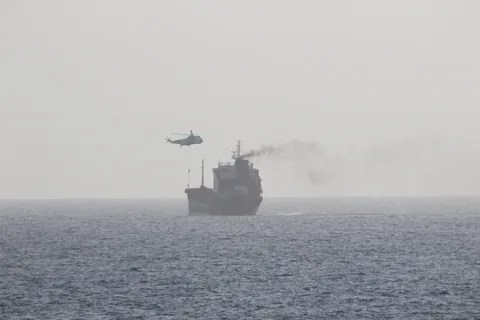
The Strait of Hormuz cannot remain ineffective as a route for global shipping for an extended period. Such a situation deepens the global inflation crisis, particularly in the United States, which is already experiencing a sharp slowdown in economic growth, rising prices for essential goods, a stagnant real estate market, and increasing unemployment, among other challenges.
The U.S. Federal Reserve is expected to raise interest rates by another 25 percentage points this year at its meeting scheduled for October 27, in a final attempt to curb rising prices and inflation. However, this would also slow market activity and further constrain bank lending, purchasing, and sales.
The second premise: A Democratic Congress would restrict Trump’s room for maneuver
All the opinion polls conducted by American and international media organizations—including AP, Reuters, CNN, The New York Times, The Washington Post, and others—point toward Democrats winning a majority of between five and fifteen seats in the House of Representatives and between one and three seats in the Senate.
This would limit President Trump’s ability and authority to conduct military operations requiring authorization and funding from Congress, which would this time be controlled by Democrats.
The third premise: The new Congress will not take office immediately after the election
The new Congress will be elected on November 3 but will hold its first session on January 3, as stipulated in Article 11 of the amendment to the U.S. Constitution.
The fourth premise: A negotiated settlement with Iran is unlikely
A negotiated settlement with the Islamic Republic of Iran is unlikely because there is no centralized leadership capable of accepting an agreement that offers political concessions and concessions affecting national sovereignty in exchange for ending the war and the blockade.
The conclusion: A narrow window for military action
Military operations aimed at ending the crisis or imposing a negotiated settlement appear almost inevitable. However, the American administration’s window is limited to the period between November 4 and January 3.
Such operations would require weeks to complete. They would therefore have to begin by mid-November at the latest if they are to be concluded before January 3.
This brings us to the second part of the assessment: the nature of those military operations and the possibility of an invasion of Kuwait and Qatar.
An Invasion of Kuwait and Qatar: A Situation Assessment
An invasion of Kuwait and Qatar is not science fiction. Nor is it something Iran wants. Yet Iran may find itself compelled to take that course if the United States conducts ground landings in Bandar Abbas or on Kharg Island.
The following statements and developments explain why this possibility deserves consideration.
On July 17, 2026, Ahmad Bakhshayesh Ardestani, a member of the Iranian parliament’s National Security Committee, said in an interview with the Iranian semi-official website Entekhab:
“If the United States launches a ground attack on Iran, Iran may also launch a ground attack on Kuwait and Bahrain.”
The original Persian source was an interview conducted by Entekhab and quoted by Iran International. The original wording refers to an American ground attack, not merely the deployment of troops. The fact that the statement came from a member of parliament establishes its attribution to a parliamentary official, but does not automatically make it an approved military decision.
Subsequently, Mohammad Reza Akraminia, the Iranian army’s spokesman, told Iranian state television:
“If the Americans enter one of our islands, we will certainly target them on our own islands, let alone on the territory of other countries.”
The statement threatens to target American troops, but does not explicitly name Kuwait or Bahrain.
An Al Jazeera report dated August 17, 2026, also described discussions among hardline Iranian politicians and media outlets about a ground incursion targeting American interests in Bahrain and Kuwait if Washington invaded Iran. The report noted that analysts questioned the feasibility of such an operation and the risks it would entail.
On the American side
On March 27, 2026, during an investment forum in Miami, President Donald Trump jokingly referred to the Strait of Hormuz as the “Strait of Trump,” saying:
“They have to open up the Strait of Trump—I mean Hormuz.”
On June 11, 2026, Trump wrote on Truth Social that the United States would, in the not-too-distant future, seize Kharg Island and other oil infrastructure sites and take control of Iran’s oil and gas markets.
Former Republican Senator Lindsey Graham also urged Trump to seize control of Kharg Island during an interview with Fox News on March 22, 2026. Graham invoked the bloody Battle of Iwo Jima, fought between American and Japanese naval forces during World War II. The battle lasted six weeks and ended with U.S. Marines taking control of the island.
As discussed in the first part of this article, “Trump’s Open Window,” the region cannot indefinitely remain in a state of neither peace nor war. The continued partial closure of the Strait of Hormuz affects the flow of oil and energy to global markets and places pressure on the American economy.
Moreover, the incoming Democratic Congress, which will begin its work in early January 2027, will tighten the constraints on Trump. This creates an imperative to impose a swift and lasting resolution during the limited period between November 3 and January 2—the period we have called “the window.”
Why the conflict could move onto the ground
Logically, the United States will not be able to bring the war to a decisive conclusion through airstrikes alone. These have so far failed to settle the conflict.
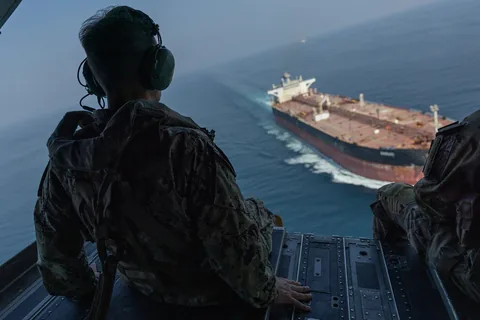
A decisive outcome would instead require military control on the ground and the reopening of the strait by force through the occupation of Bandar Abbas. It would also require pressure on Iran to surrender or make concessions affecting its sovereignty through the occupation of Kharg Island, which contains most of the Islamic Republic’s petroleum reserves.
If American forces take this step—which, in my view, would be foolish—Iran will have no option but to attack America’s Gulf allies and invade their territory. The purpose would be to exchange an Iranian withdrawal from those territories for an American withdrawal from occupied Iranian land.
What Saudi Arabia appears to have understood
This is precisely what the Saudi leadership understood. It therefore moved quickly to establish the Mecca alliance and bring Pakistan and Turkey into a mutual defense treaty protecting the kingdom’s borders.
Saudi Arabia also sought the assistance of the Egyptian military to defend its territory, as stated in the official Egyptian announcement itself.
Logically, the entry of all these countries and armies into the kingdom to protect its “borders and territory” is not a response to the Houthi threat coming from Yemen. Rather, it reflects the expectation of a major war involving reciprocal incursions by the armed forces of the Islamic Republic and the United States.
Why Kuwait and Qatar could be exposed
The anticipated Iranian defensive incursion is unlikely to be directed toward Saudi Arabia, in order to avoid a confrontation with Turkey, Pakistan, and Egypt.
It is also unlikely to be directed toward the United Arab Emirates, given the concentration of American military strength there near the strait.
Bahrain is likewise an unlikely target because of the presence of the U.S. Fifth Fleet.
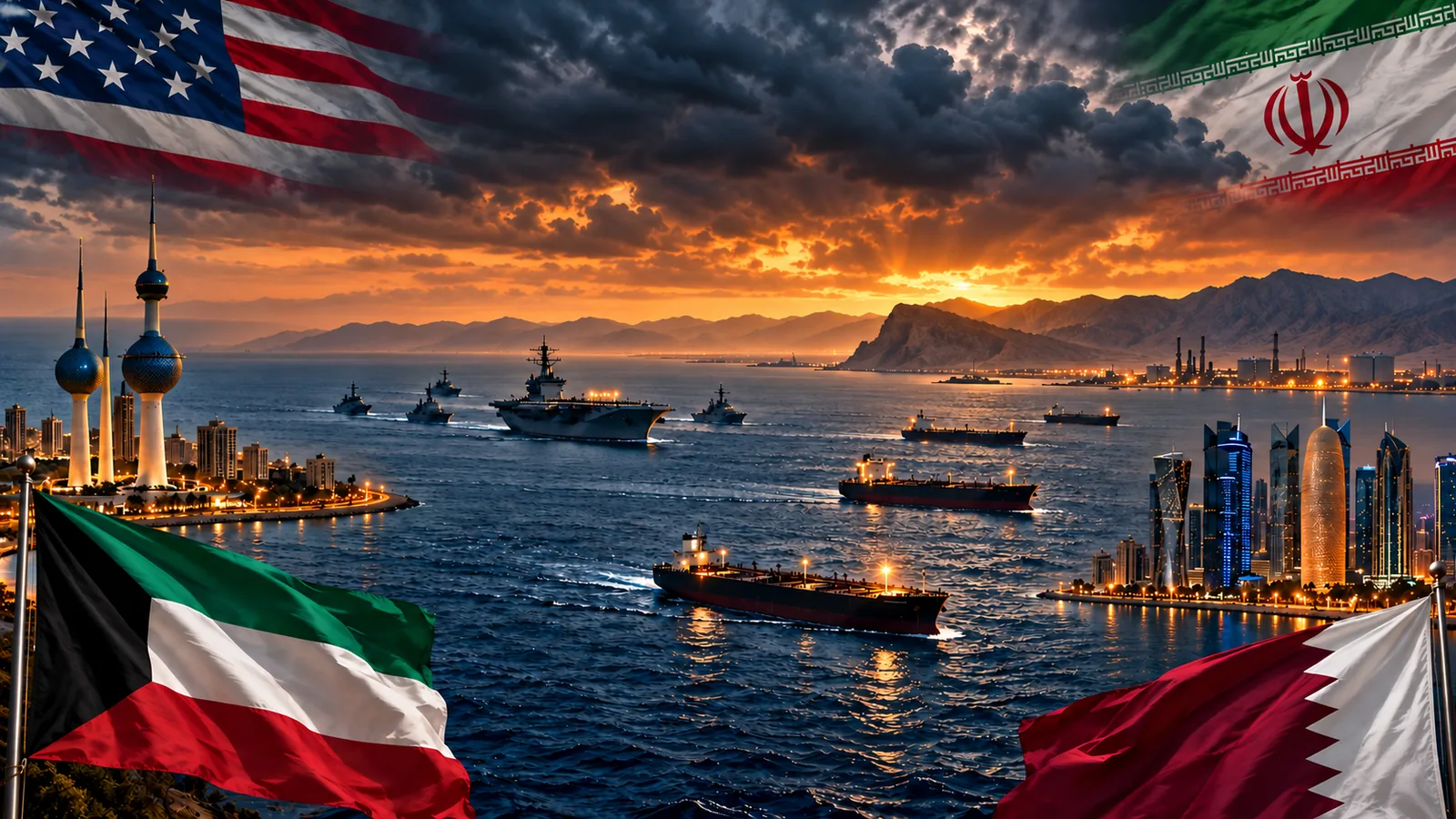
That leaves Kuwait and Qatar as the exposed countries, without a substantial concentration of American forces, which may by then have moved south toward the strait.
This is a scenario I do not wish to see unfold. Yet it is entirely possible and follows a logical course.
God knows best.
Sources
Iran International, citing the Iranian website Entekhab.
Euronews.
Al Jazeera English.
Defense News.
Fox News.
RealClearPolitics.
Reuters.
Council on Foreign Relations.
Opinion by Dr. Mohammad Riyad. Exclusively for Northgate News.
Byline: Dr. Mohammad Riyad · Human founder and opinion contributor.

Dr. Mohammad Riyad
Dr. Mohammad Riyad is the founder of Northgate News and an opinion contributor on elections, the economy, and political affairs.
More opinion