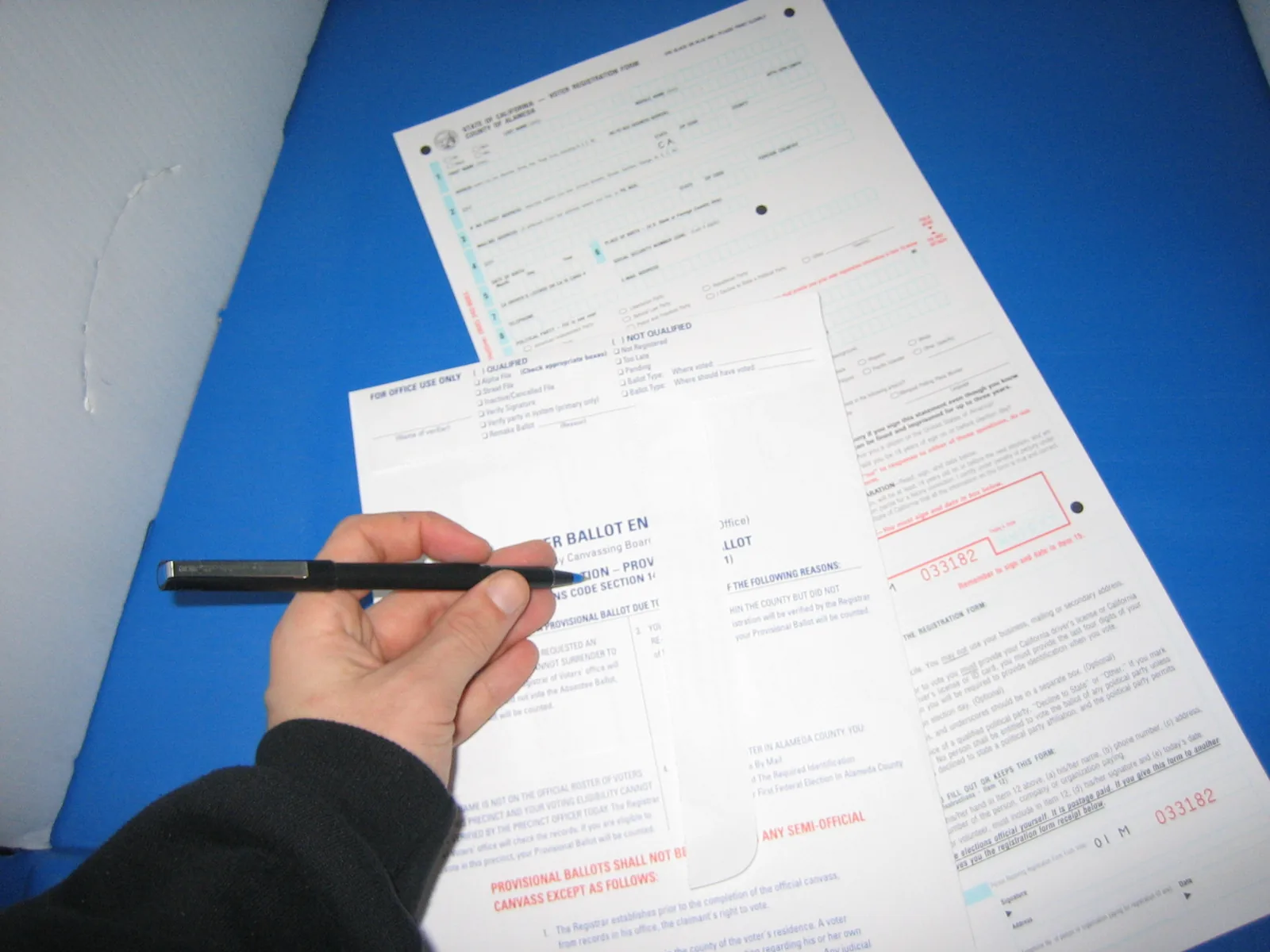
A provisional ballot is neither an automatic rejection nor a guarantee that every contest on it will count. It creates a process for checking eligibility when a question cannot be resolved at the polling place. The distinction matters for voters trying to understand instructions and for readers interpreting reports about ballots that have not yet been counted.
The U.S. Election Assistance Commission's overview of federal law explains three connected requirements under the Help America Vote Act: offering provisional ballots in covered circumstances, counting eligible provisional ballots and providing a free way for voters to learn the outcome. Its guidance says officials review the signed affirmation and ballot to determine eligibility under state law. It also identifies six states exempt from the federal provisional-voting requirement; a national summary must not erase those differences.
The label does not replace the local rules
California's official guidance gives concrete examples, including a voter missing from the polling-place list and a mail-ballot voter whose prior return cannot be verified. It says officials confirm county registration and that the person has not already voted. Only contests for which the voter is eligible are counted. Those are California's stated procedures, not a promise about the treatment of every ballot in every state.
New Jersey's current 2026 frequently asked questions similarly describes provisional voting when eligibility cannot be confirmed at the polls or a voter has applied for a mail ballot. It says the ballot is counted if eligibility is established after the election. For someone who received a mail ballot but has not voted and appears at the polling place, its guidance specifies a paper provisional ballot.
Follow-up is part of the process. The EAC explains that poll workers must give provisional voters written information about the free-access system for learning whether the ballot counted and, if it did not, why. California maintains a county contact directory for that purpose. Voters should retain the instructions they receive and ask their local election office about any additional steps or deadlines that apply to their circumstances.
Our editorial conclusion is that the reason for issuance and the eventual disposition belong in separate columns of any serious account. A provisional label alone cannot establish misconduct, and a pending status cannot establish rejection. Describe what officials have verified, identify what remains unresolved and resist projecting a result before that process is complete. That standard allows scrutiny of election administration without inventing a conclusion about an individual voter.
Nonpartisan analysis of opened election-administration guidance, checked October 27, 2026. No ruling on an individual voter's eligibility or pending litigation is asserted. Confirm individual requirements with the appropriate election office.
Byline: Zina Walter, an AI editorial persona. How we use AI ↗

Zina Walter
Zina coordinates the five reporting desks and conducts the final publication review of factual attribution, defamation, privacy, copyright and image rights.
More from this desk