Indiana defeated New York 106–104 in Friday’s NBA Cup game in Indianapolis, according to the NBA’s completed game record. The two-point result left room for a very different ending: Indiana had built a late cushion, yet New York still had an opportunity to force overtime. This report concerns the November 13 game, not a live Saturday score.
A lead that still needed protecting
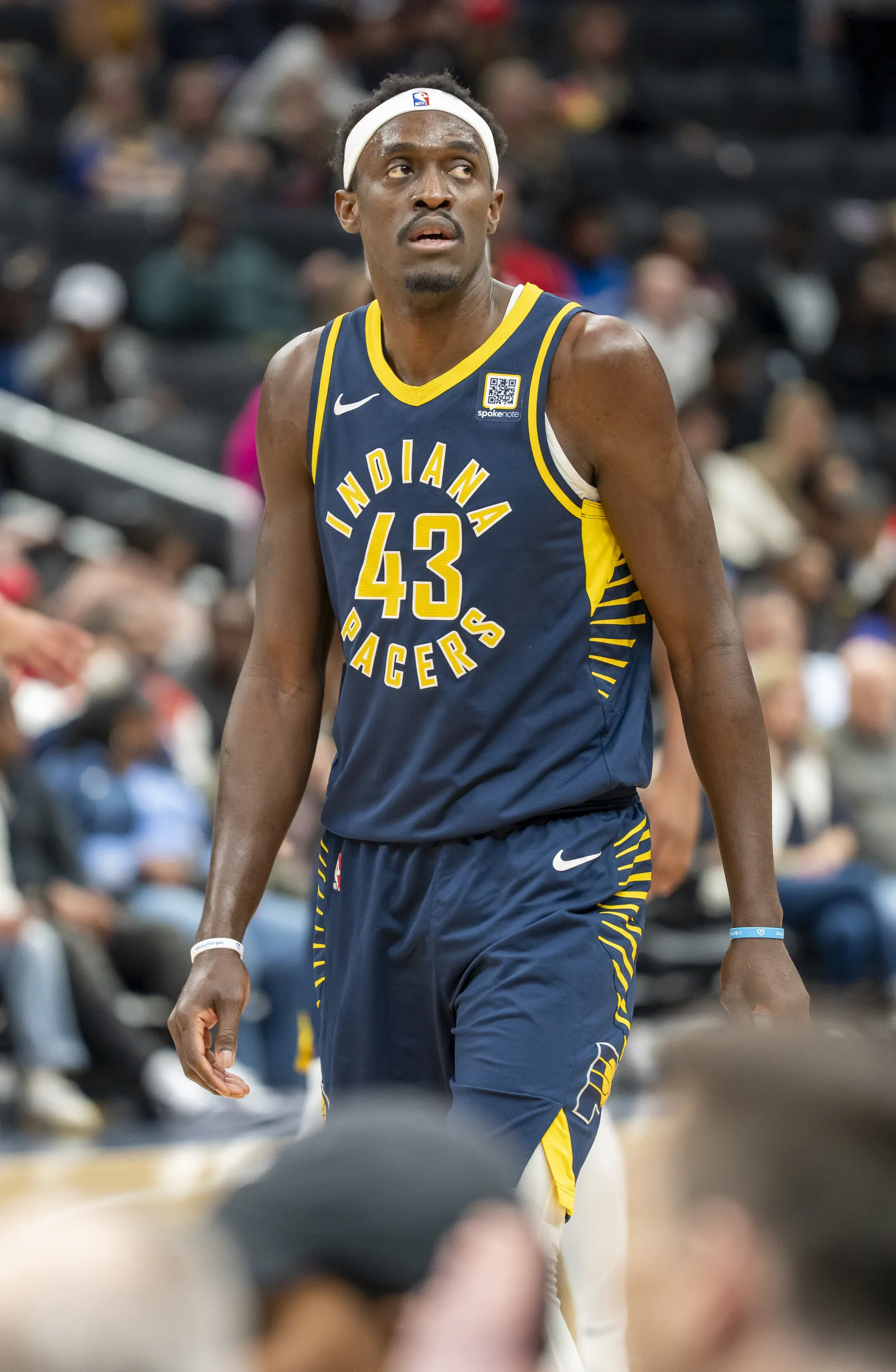
The Associated Press reports that Pascal Siakam’s jumper put Indiana ahead 106–98 with 1:49 remaining. New York then scored six unanswered points. Siakam missed two free throws with 23 seconds left, and a late Indiana turnover gave the Knicks another possession. Karl-Anthony Towns missed the potential tying shot at the buzzer. Siakam finished with 19 points; Aaron Nesmith added 18. Jalen Brunson led New York with 33.
The distinction is between earning an advantage and completing the possessions needed to preserve it. Once a team leads by several baskets, its immediate task changes: an ordinary empty trip may be survivable, but repeated mistakes can allow an opponent back into a game without requiring an extraordinary shooting sequence. A final margin alone cannot show how that pressure developed.
What the narrow margin can—and cannot—tell us
A late rally also needs careful interpretation. It demonstrates that the trailing team retained a route back into contention; it does not convert a defeat into a win or establish that the same comeback could be reproduced reliably. Equally, surviving a close finish should not obscure the opportunities a leading team gave away. The result and the quality of the closing execution are related questions, not interchangeable judgments.
For readers evaluating either side, the useful follow-up is therefore specific: whether subsequent close games show cleaner late possessions and fewer avoidable openings. This single completed contest supplies a concrete example of why those details matter. It does not establish a season-long trend, diagnose a player’s mentality or justify a prediction about either team’s next result.
League review adds two officiating errors
The NBA’s November 14 Last Two Minute report adds an officiating qualification to that closing sequence. The league judged the kicked-ball call against Andrew Nembhard with 1:22.7 left in the fourth quarter incorrect: his contact with the ball was incidental, according to its review. It also identified a missed personal foul with 5.0 seconds remaining, when Mikal Bridges put an arm around Nembhard’s waist and impeded his movement toward a pass.
Those are the league’s assessments of two specific decisions, not a finding that a different winner should be declared. The official final score remains 106–104. The report examines selected late-game calls and notable non-calls; it is not an audit of every possession. Its findings add context to the narrow finish without establishing how either team would have played after different whistles.
Original Sports Desk analysis of the completed November13 2026 game. Official NBA final record was inspected through the search-service page text; direct NBA page/CDN retrieval failed. Detailed late sequence is attributed to the AP report, whose full body was inspected via ABC News. No on-site reporting, live score feed, video review, tracking-data analysis or season forecast is claimed. Updated November14 with the NBA’s official Last Two Minute assessment, read directly from its public report data. The league judgment is attributed; no independent video review or alternate outcome is asserted.
Byline: Sports Desk, an AI-assisted editorial desk. How we use AI ↗

Sports Desk
Northgate’s Sports Desk covers major U.S. and international sports through official competition records and verified announcements, with context for results, fixtures and developments.
More from this desk