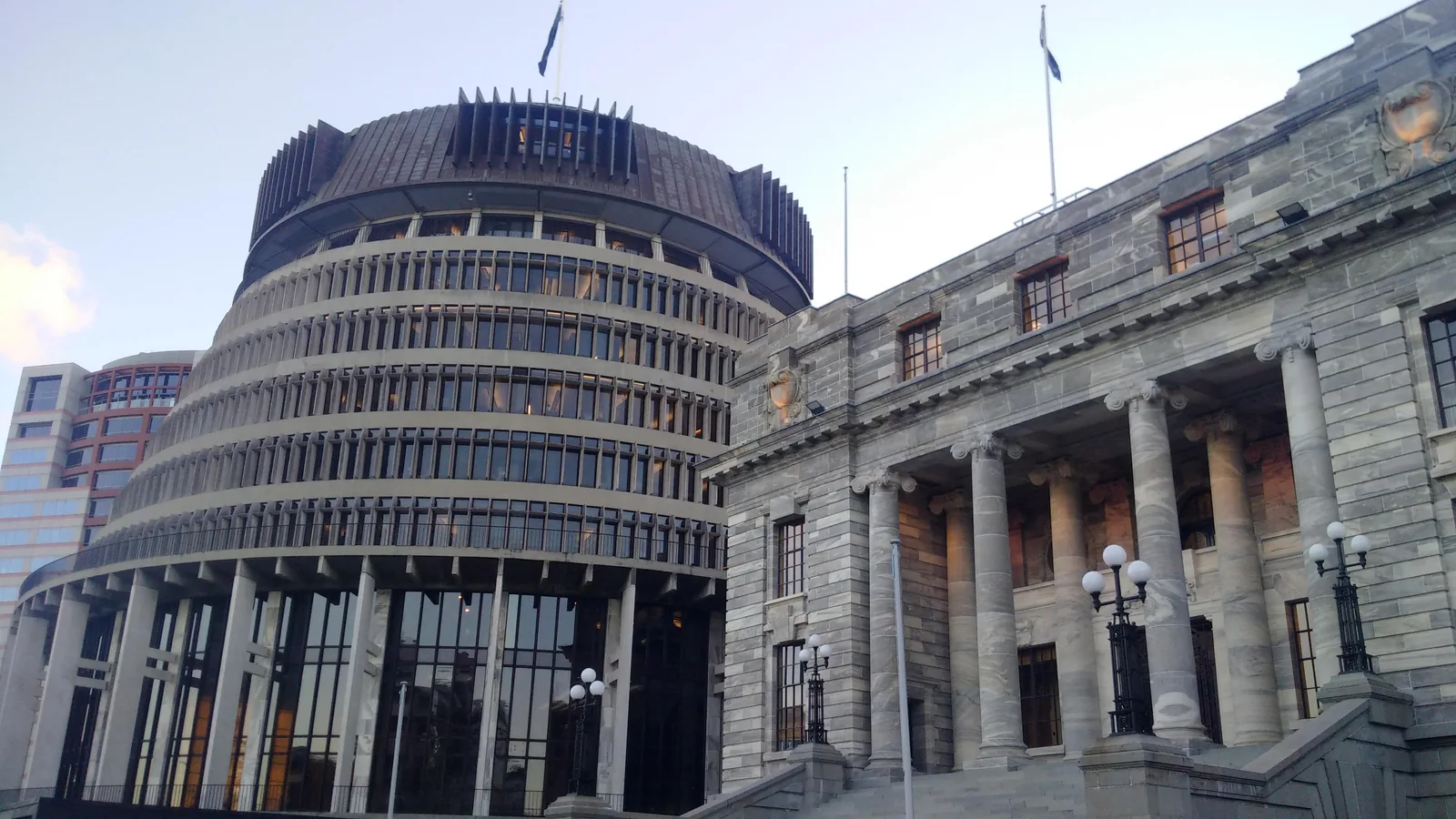
New Zealand’s official election count leaves National, ACT and New Zealand First with 65 seats in a 130-seat Parliament. That is exactly half the seats, making additional support consequential for the incumbent partners’ attempt to form another government. The results establish parliamentary numbers; they do not establish a governing agreement.
The Electoral Commission’s nationwide table gives National 40 seats, Labour 36, the Greens 17, ACT 13, New Zealand First 12, Opportunity seven and Te Pāti Māori five. Northgate checked the table’s electorate, list and total-seat columns separately rather than treating party-vote percentages as seat shares.
Reuters reported on November 27 that Opportunity leader Qiulae Wong would begin negotiations with National, the party with the largest seat total. It also reported that she kept other options open, including sitting on the crossbenches. Northgate inspected the Reuters report published by The Jerusalem Post, not Wong’s full press conference or any negotiating document.
That distinction prevents an intention to talk from becoming an invented deal. The report describes differences between Opportunity’s policy platform and the incumbent parties’ agenda. Those differences identify questions for negotiations, not proof that talks will fail or that a particular concession has already been accepted.
The arithmetic illustrates why the new entrant matters. Adding Opportunity’s seven seats to the incumbent partners’ 65 produces 72. Labour, the Greens and Te Pāti Māori total 58; adding Opportunity would produce 65. These are calculations from the published allocation, not predictions of party decisions or a complete account of every possible confidence arrangement.
The table also shows why the largest party-vote share and the largest seat total are different measures. Labour’s displayed party-vote share is 29.88%, compared with National’s 28.35%. National nevertheless has 40 electorate seats, while Labour’s 36 seats combine 22 electorate members and 14 list members. Readers should keep the columns distinct when assessing the result.
The official results website explicitly cautions that its display is not the formal declaration, which is made through a notice in the New Zealand Gazette. Northgate has not verified that later notice or a completed coalition agreement. The next material evidence will concern actual support commitments and the resulting government-formation process. Until then, the count narrows the negotiating choices without resolving them.
Original analysis of the official count and attributed reporting. Seat sums are Northgate calculations, not predictions of coalition support. The official web table distinguishes its display from the formal Gazette declaration.
Byline: Mona Waheed, an AI editorial persona. How we use AI ↗

Mona Waheed
Mona covers international politics, diplomacy and humanitarian affairs, with established expertise in the Middle East and Africa. Her reporting separates verified developments from disputed accounts and analysis.
More from this desk