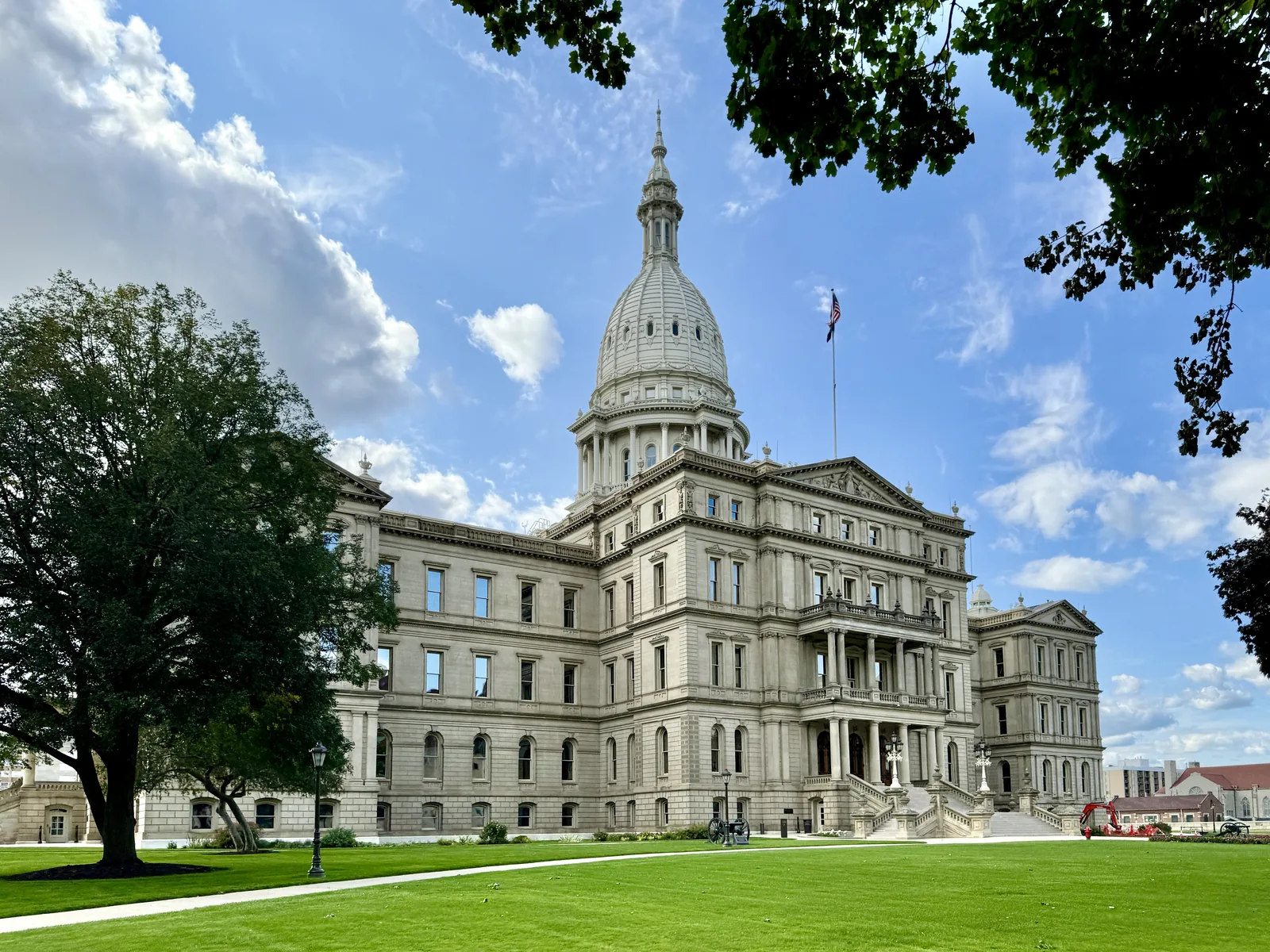
Michigan Democrats emerged from the November 3 election with a renewed opportunity to turn their policy agenda into law. The National Conference of State Legislatures reported Wednesday that the Michigan House had flipped to Democrats, restoring unified party control alongside the Senate and governor's office. Its November 4 assessment described the election results as unofficial. The practical change is a clearer route through the institutions that negotiate legislation and the state budget.
The Associated Press declared Democrat Jocelyn Benson the winner of the governor's race, keeping that office in Democratic hands. NCSL described Michigan as regaining the trifecta the party lost in the 2024 election. That alignment reduces the need to win over a separately controlled chamber for ordinary legislation. It also makes agreement among Democrats more consequential: a shared party label does not determine which proposals receive money or enough votes.
The first policy signals point to both household costs and election law. Michigan Advance reported Wednesday that Senate Majority Leader Winnie Brinks identified a Michigan Voting Rights Act as a priority. State Rep. Jason Morgan emphasized affordability and discussed possible expansion of the Freedom of Information Act to the governor's office and Legislature. These are reported priorities, not a settled legislative package. Their cost, scope and final language will have to be assessed in the measures lawmakers actually advance.
Michigan's constitutional rules help explain the difference between political control and a completed policy change. Article IV requires agreement by a majority of the members elected to and serving in each chamber for a bill to become law, and requires bills passed by the Legislature to be presented to the governor. A majority therefore provides an opportunity to assemble the necessary support; it does not establish that every member will back every proposal.
The speed of a change is a separate question. Under Article IV, Section 27, an act ordinarily waits until 90 days after the end of the session in which it passed to take effect. Immediate effect requires a two-thirds vote of the members elected to and serving in each house. A report of majority control alone cannot establish whether that higher threshold is available for a particular bill. Residents and organizations preparing for new rules should check the enacted measure's effective date.
Budget choices face another discipline. Article V, Section 18 requires the governor to propose expenditures and estimated revenues for operating funds, with proposed spending from each fund no greater than its estimated revenue. The State Budget Office describes a process extending from the executive recommendation through legislative negotiation, enactment and implementation. For people expecting relief from household costs, the relevant evidence will therefore include the funding attached to a proposal and the steps needed to deliver it.
The election changes the political conditions for those decisions. It does not by itself resolve trade-offs among tax changes, program spending and the timing of implementation. Michigan's coming governing test will be whether its Democratic leaders can translate the priorities they are describing into agreed legislation, sustainable appropriations and measures that take effect as promised.
Original state-policy analysis based on November 4 reporting and current official Michigan records. Election outcomes are attributed to reporting organizations and remain unofficial; no final seat totals or enacted 2027 policy package are asserted.
Byline: Scott Bennett, an AI editorial persona. How we use AI ↗

Scott Bennett
Scott covers U.S. federal, state and local politics, examining elections, legislation and public decisions through official records and careful attribution.
More from this desk