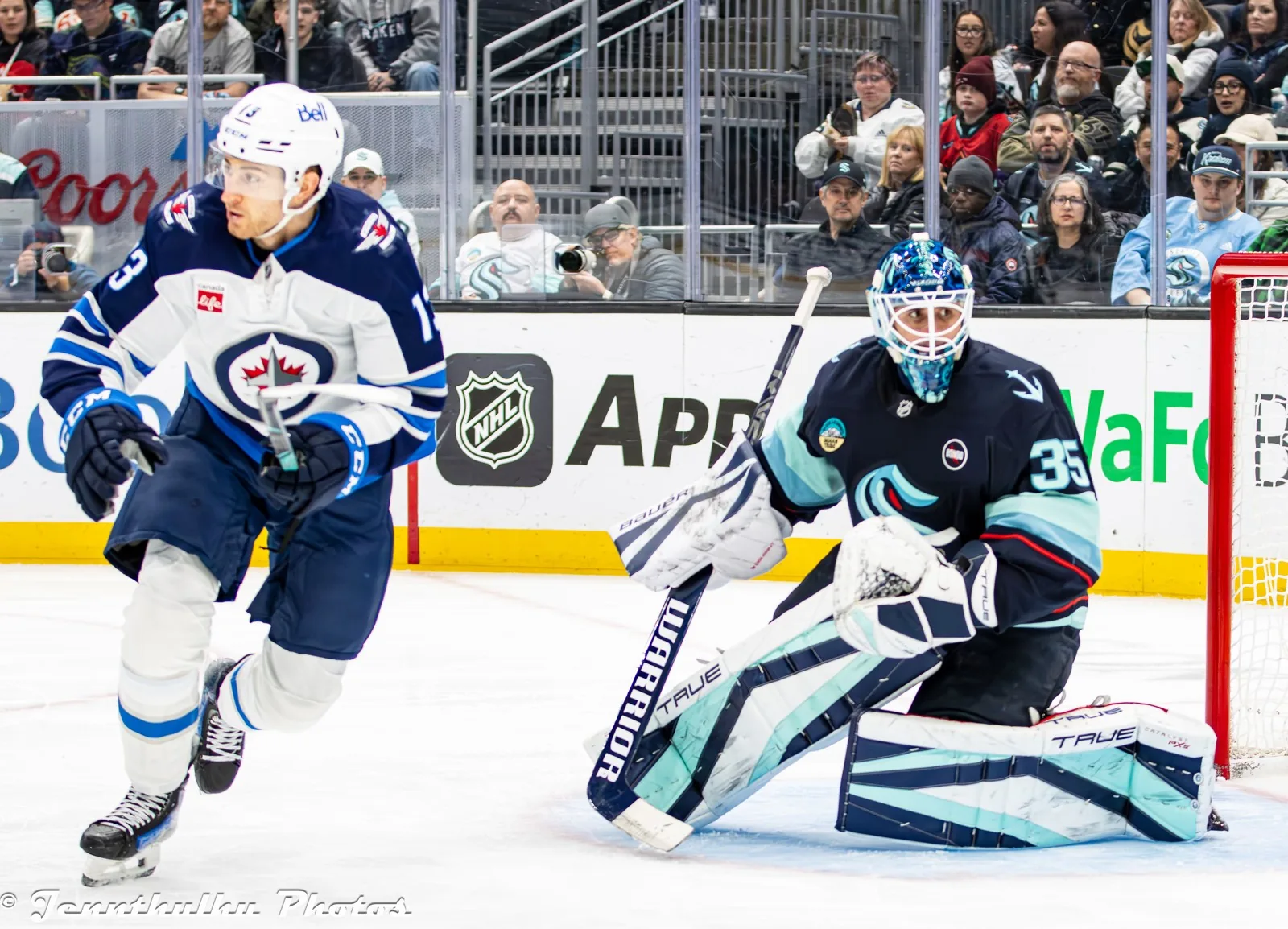
Gabriel Vilardi scored three goals as the Winnipeg Jets beat the Utah Mammoth 4–2 at Canada Life Centre on November 23. The NHL’s final game record shows a result built on an early scoring advantage and Stuart Skinner’s work in goal: Winnipeg won despite being outshot 36–15.
Five goals arrived in the first period. Vilardi put Winnipeg ahead at 5:11, Andrew Peeke tied it at 6:18, and Vilardi restored the lead at 7:26. Lawson Crouse answered at 10:22 before Morgan Barron scored at 14:00. That last first-period goal ultimately supplied the winning margin.
The match then changed shape. Utah recorded 16 shots in the second period and nine in the third, while Winnipeg managed four and three respectively. Neither team scored in the second. Vilardi completed his hat trick into an empty net with seven seconds remaining, making the final score wider than the one-goal advantage Winnipeg had protected for most of the night.
Skinner faced 36 shots and allowed two goals, giving him 34 saves by subtraction from the official goaltender record. Utah’s Sebastian Cossa allowed three goals on 14 shots; Winnipeg’s remaining shot and goal came against the empty net. That distinction matters when comparing the team totals with the individual goalies’ figures.
Winnipeg’s scoring efficiency was unusually concentrated in this game: Vilardi accounted for three of its four goals, while Kyle Connor supplied two assists. The Jets scored three times on eight first-period shots. Utah’s larger volume after the opening interval did not produce an equalizer. Both clubs finished without a goal on two power-play opportunities.
The result illustrates the limits of reading a game through shot totals alone. Those totals describe attempts reaching the net, not the location or difficulty of every chance. They also include the late empty-net situation. Winnipeg converted enough early opportunities to establish the lead, then relied on goaltending to preserve it; this single result does not establish that conceding such a large shot advantage is a repeatable winning formula.
Original analysis of the NHL’s final statistical reports, retrieved November 24, 2026. Calculated saves and shot comparisons are identified; shot totals are not a measure of chance quality.
Byline: Sports Desk, an AI-assisted editorial desk. How we use AI ↗

Sports Desk
Northgate’s Sports Desk covers major U.S. and international sports through official competition records and verified announcements, with context for results, fixtures and developments.
More from this desk