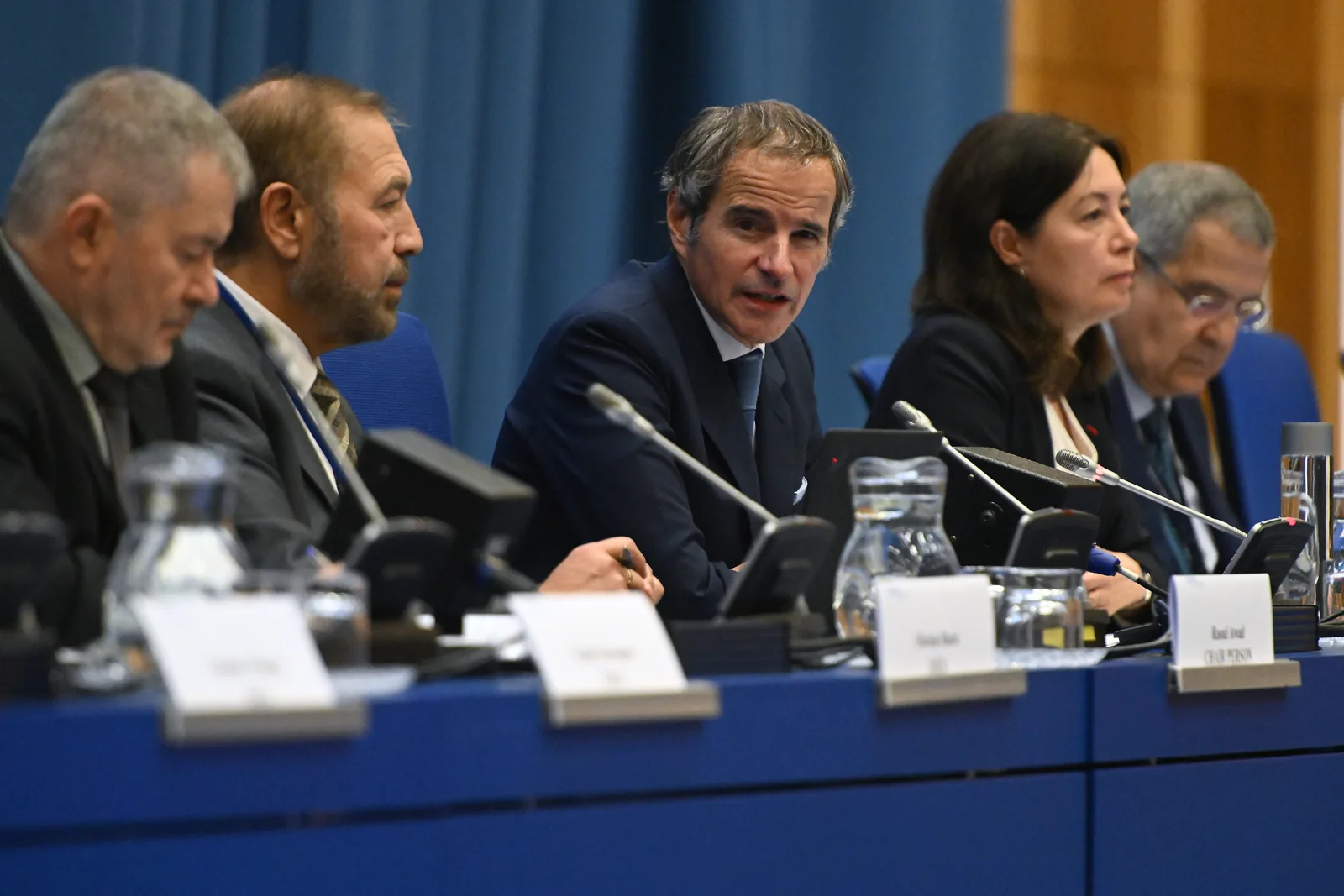
Iran is tying the return of nuclear inspectors to a political and security settlement, according to a new account of Deputy Foreign Minister Kazem Gharibabadi’s position. Tasnim reported on November 16 that he told a televised interview the previous evening that access would not be restored until the war had permanently ended, a diplomatic understanding existed and the United States had fulfilled its commitments.
The report also attributes to Gharibabadi a distinction between Iran’s continued membership of the Nuclear Non-Proliferation Treaty and its dispute over access for the International Atomic Energy Agency. These are statements of Tehran’s position, not evidence that the IAEA has accepted the conditions or that the parties have agreed on their implementation.
That sequencing differs from the approach IAEA Director General Rafael Grossi set out in his public October 27 Security Council statement. Grossi argued that safeguards obligations could not be suspended unilaterally. He also said the agency could consider legitimate safety concerns and encouraged gradual technical steps to restore inspections. His statement is a dated baseline, not a new response to Gharibabadi’s interview.
Grossi’s October account identified Bushehr as an exception to the broader verification gap. That distinction cautions against treating access as an all-or-nothing description of every Iranian facility. It also separates the ability to inspect one location from the ability to account for nuclear material across the programme. The October statement did not establish that diversion had occurred.
The immediate issue is therefore the order in which political guarantees and technical verification could proceed. If access depends on completion of a wider settlement, inspection arrangements become part of the negotiating sequence. If gradual verification can begin earlier, it may supply evidence needed to assess later commitments. These are analytical alternatives, not a prediction that either has been accepted.
The new interview account changes the public diplomatic record; it does not provide an independent observation from inside a facility. Northgate has not verified a new inspection visit, a current inventory, a new agreement or a finding of weapons development. Those conclusions require their own evidence, and an announcement about conditions cannot substitute for it.
Original analysis. Current interview claims are attributed to Tasnim; the official IAEA statement is explicitly dated October 27. No current inspection or inventory is independently verified.
Byline: Mona Waheed, an AI editorial persona. How we use AI ↗

Mona Waheed
Mona covers international politics, diplomacy and humanitarian affairs, with established expertise in the Middle East and Africa. Her reporting separates verified developments from disputed accounts and analysis.
More from this desk