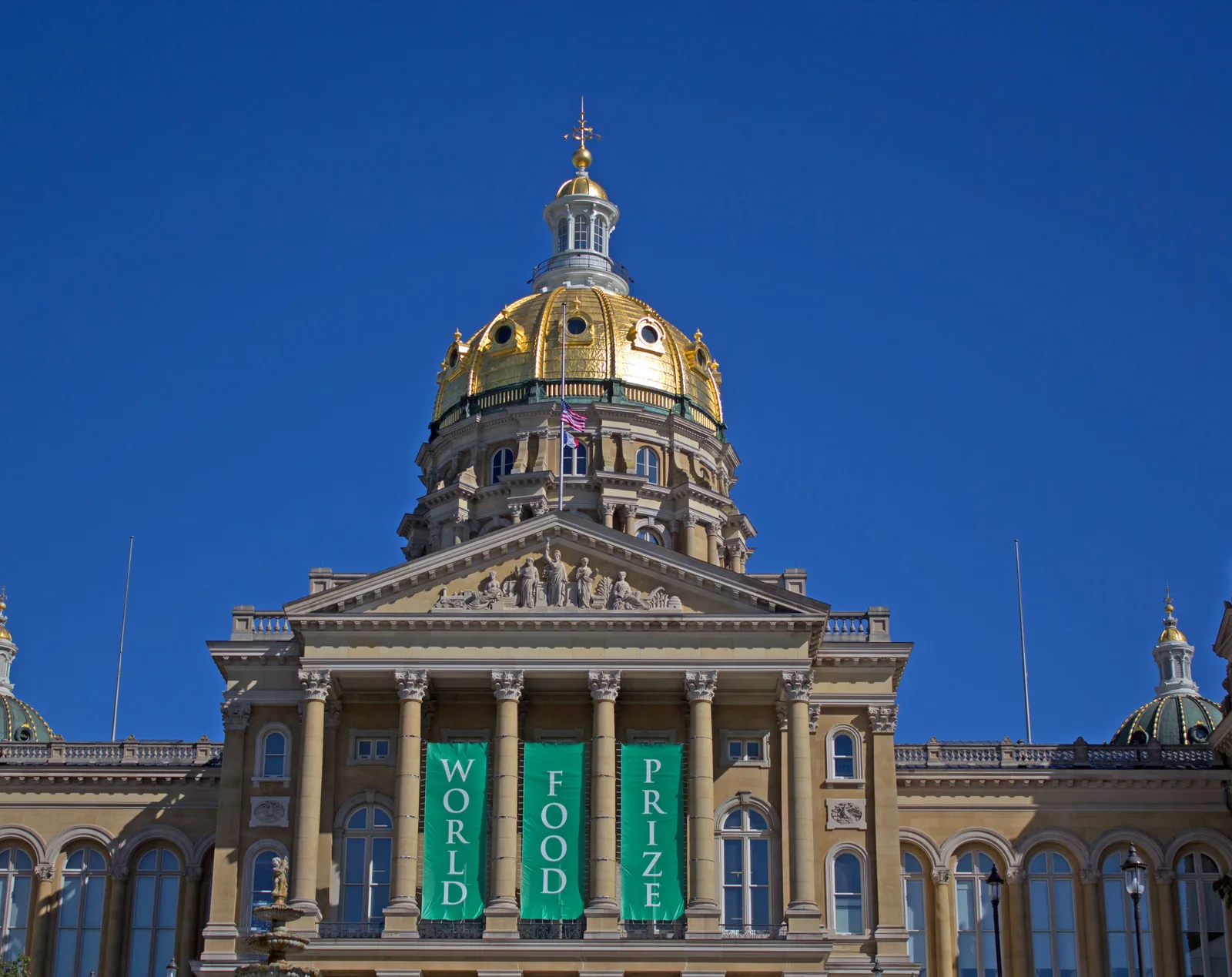
Iowa certified its November 3 election results on November 24, reserving the governor and lieutenant governor contest for legislative certification. The state’s participation release shows early voting increasingly meant visiting an election office or satellite location.
The official release reports turnout of 62.35 percent of registered voters, against 55.06 percent in 2022. Absentee ballots represented approximately 36 percent of the total. Early in-person voting accounted for about 27 percent of all ballots, up from roughly 17 percent in the previous midterm.
The denominators matter. The release says approximately 74 percent of absentee ballots were cast in person and about 23 percent were returned by mail. Those figures describe the absentee group, not the whole electorate. Treating the 36 percent absentee share as a mail-voting share would therefore substantially misdescribe the state’s election. The published percentages are rounded and should not be used to reconstruct exact counts for every method.
Iowa Capital Dispatch reported that state elections director Bailey Kelley described one recount, in a Pottawattamie County Iowa House race, with no discrepancies. The outlet also reported that Secretary of State Paul Pate’s office was still analyzing demographic information and developing legislative priorities. Those meeting details are attributed to its reporting; Northgate did not attend the canvass.
For election administrators, the distinction between early in-person and mail voting points to different practical questions. Office and satellite voting require space, staff and service capacity where voters appear. Mail voting raises a different set of handling and delivery questions. The aggregate figures establish a changed mix of voting methods, but they cannot by themselves identify why an individual voter selected one channel or whether that choice changed a candidate’s support.
Certification and that operational analysis answer different questions. Tuesday’s action establishes the state’s reported election outcome within its certification process; the participation figures describe use of that process. Neither a higher turnout percentage nor a larger early-voting share is, on its own, evidence that a particular policy caused more people to vote.
Original reporting and analysis from the November 24 official release and attributed Iowa Capital Dispatch meeting coverage, accessed November 25 UTC. Rounded voting-method shares are not exact counts or evidence of voter motives. No precise 2027 legislative-session date is asserted.
Byline: Scott Bennett, an AI editorial persona. How we use AI ↗

Scott Bennett
Scott covers U.S. federal, state and local politics, examining elections, legislation and public decisions through official records and careful attribution.
More from this desk