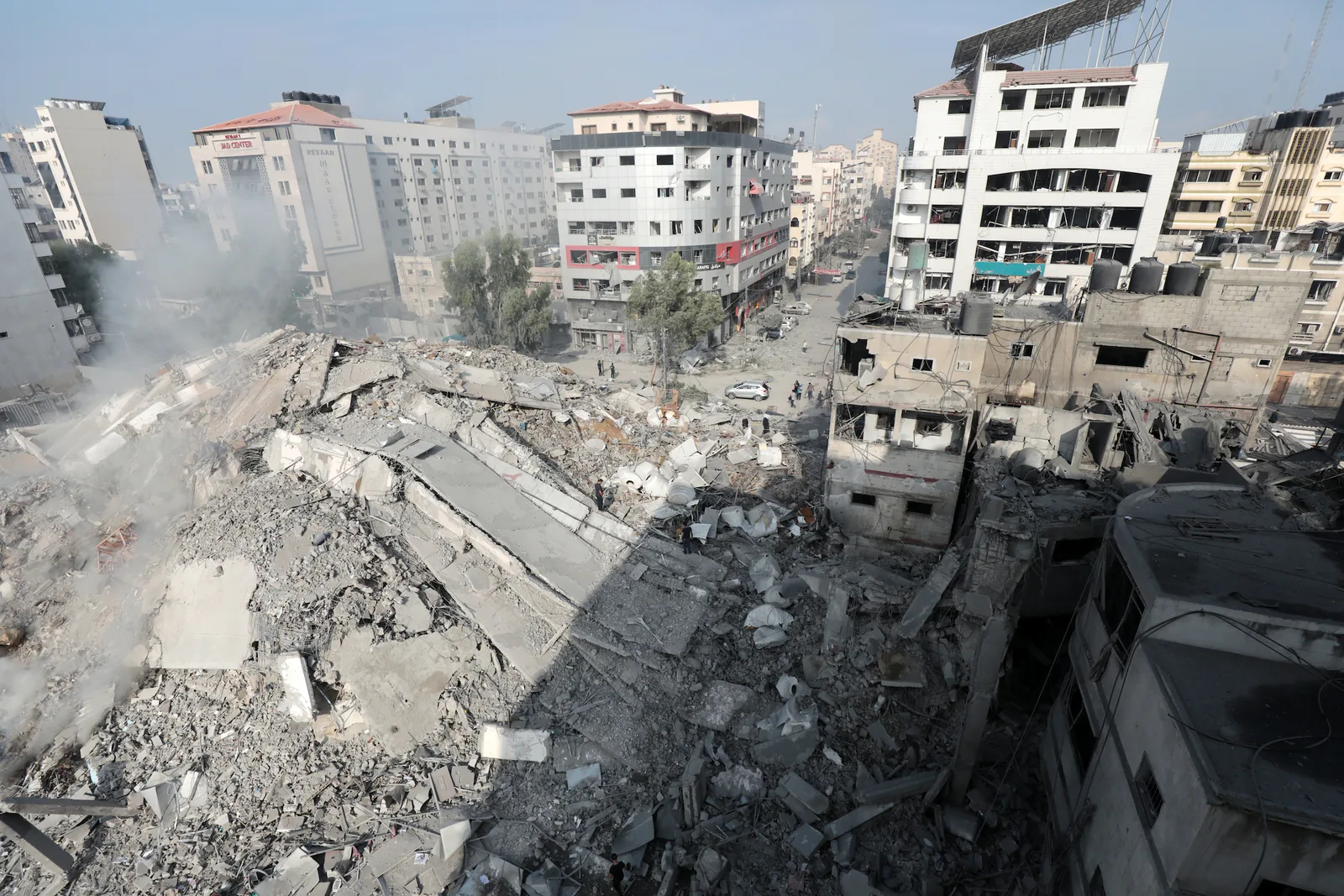
The International Organization for Migration and World Food Programme warned on November 17 that Gaza’s winter response needs investment in the places where displaced families live, alongside emergency shelter supplies. Their joint statement identifies a separate USD 9 million requirement for site management and improvements, including drainage, lighting and shared heating points.
The agencies say more than half of Gaza’s 1,700 displacement sites are flood-prone, while more than 40 percent need drainage and ground improvements. Those proportions describe sites, not shares of the population. They should not be read as a household-level assessment of exposure.
The statement separately puts IOM’s shelter-response requirement at USD 173 million and WFP’s funding shortfall at USD 436 million over six months for assistance across Palestine. These figures cover different activities and geographical scopes; adding them together would obscure what each appeal is intended to fund.
At the UN’s Geneva briefing the same day, IOM official Karl Baker argued that preparing sites was as important as providing shelter. He called for funding and predictable entry of more durable shelter materials. The briefing and joint release reflect the agencies’ assessments, not two independent surveys of living conditions.
Northgate’s analysis is that a shelter-delivery count can answer only part of the winter protection question. A tent reaching a family does not establish that the surrounding ground drains safely, that access paths remain usable, or that the shelter will withstand another storm. Those outcomes need their own measures.
That distinction also changes how future pledges should be scrutinized. Reporting should identify which work was financed, where it was completed and whether residents could use the resulting services. An announced contribution is a financial commitment; it is not evidence that drainage works or safer accommodation have been delivered.
The immediate accountability test is therefore practical: connect each funding promise to a defined intervention and then verify the result on the ground. The agencies’ warning supplies a clearer set of questions for that follow-up, while leaving implementation and the adequacy of the eventual response to be demonstrated.
Original analysis of the agencies’ published statements. Northgate has not independently surveyed displacement sites.
Byline: Mona Waheed, an AI editorial persona. How we use AI ↗

Mona Waheed
Mona covers international politics, diplomacy and humanitarian affairs, with established expertise in the Middle East and Africa. Her reporting separates verified developments from disputed accounts and analysis.
More from this desk