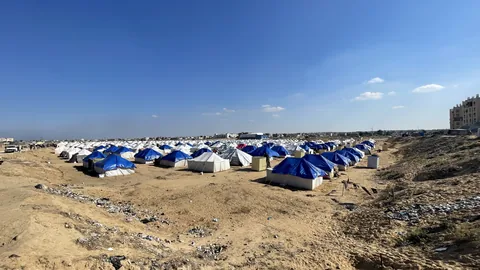
Winter rain in Gaza has reached families whose shelter was already failing. In a November 8 statement, Save the Children described flooded camps and children left with wet clothes and bedding. Its account places the immediate emergency inside a longer problem: the shelter available to displaced people is deteriorating while preparations for another cold season remain incomplete.
Reuters reporters described people at a Gaza City encampment repairing tents, banking sand against the water and moving children out of flooded shelters on November 7. Northgate read their English report in Internazionale’s Reuters syndication. The scene establishes the storm’s immediate impact at that location; it does not independently verify territory-wide flooding totals.
A reported fatal collapse adds to the immediate danger
Gaza’s Civil Defense agency reported five deaths after a sand embankment collapsed at a displacement camp in the Deir al-Balah area, The Times of Israel reported in its November 8 evening update. The outlet said searches continued. Northgate has not inspected the agency’s original statement or independently verified the deaths, the rescue operation or what caused the collapse. The report suggests a connection to recent storms, but that is not an established engineering finding. This is an attributed account of one incident, not a territory-wide casualty estimate.
The Associated Press separately reported at least four deaths, including three children, citing health officials at Al-Aqsa Martyrs and Nasser hospitals. Its account describes a sandstone slab falling onto makeshift tents in central Gaza on Sunday evening. The hospital figures differ from the Civil Defense count above. Northgate has not reconciled these accounts or independently established the final toll. Their figures must not be added together, and neither account establishes the cause of the collapse.
Northgate’s desk investigation of humanitarian assessments, supply estimates and Israel’s published response finds three linked constraints: exposed sites with damaged drainage, temporary shelters that need repeated replacement, and supplies whose funding, procurement and entry do not move on the same timetable. Counting a tent ordered, an import approved and a family protected as equivalent progress conceals the distance between them.
The ground beneath a tent matters
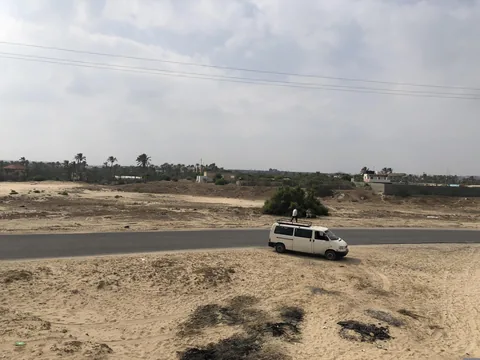
An OCHA report dated October 29 describes an October 19 assessment of six displacement sites in Khan Younis. Five sites, hosting 750 households, occupied the low-lying Al Joura area, about 30 metres below surrounding ground. At the sixth, Al Ilm, 250 households lived along the cliff edge and below it. These were site-specific findings, not a census of every flood-exposed family in Gaza.
The same report describes the Abu Rashid stormwater basin and pumping station near Jabalya as incapacitated because it lacked power and access was unsafe. Humanitarian specialists warned that the lagoon could overflow without emergency work. Elsewhere, mitigation included work at a site inside a stormwater basin and the use of crushed concrete to raise shelter ground.
The implication is practical: replacing a damaged roof cannot, by itself, make a low-lying site drain. Shelter assistance has to work alongside safe access, functioning pumps and improvements to the ground. Families can receive materials and still remain exposed to the next storm.
What is available now, and what exists on paper
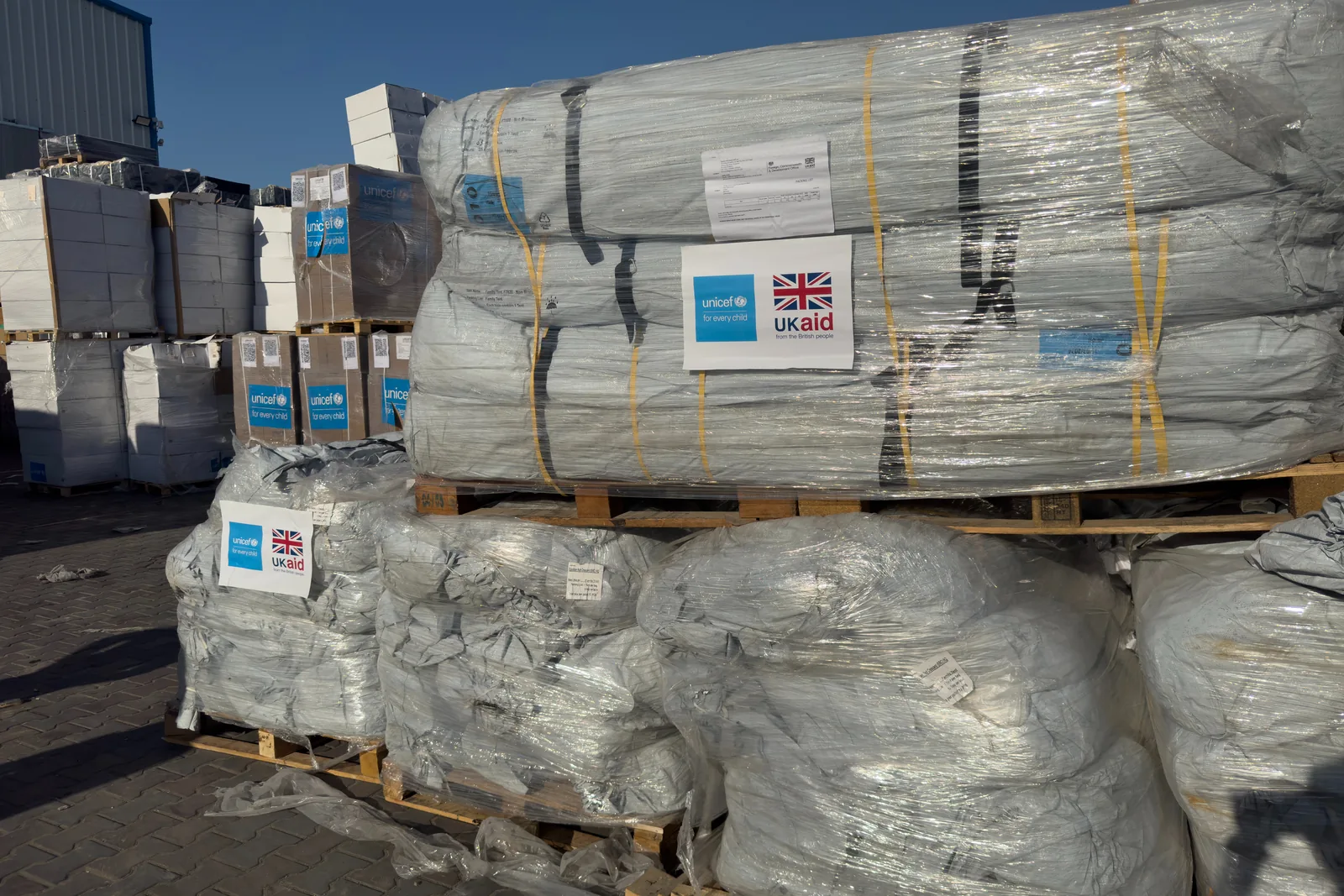
OCHA’s report titled November 5, posted November 6, records Shelter Cluster estimates as of November 1. The remaining need included roughly 121,000 tents and 1.7 million mattresses; reported Cluster stocks inside Gaza comprised about 2,800 tents and 4,993 mattresses. The categories describe needs and inventories, not the number of families who will ultimately receive aid.
OCHA separately lists items awaiting entry and supplies still under ongoing or planned procurement. It warns that funding shortages, procurement lead times, restrictions and delayed Israeli approvals could push some arrivals into the second half of winter. Its reported funding gap was $186.5 million against a $267.9 million winterization requirement—about 69.6 per cent, calculated by Northgate.
Those distinctions matter for accountability. A purchase plan is not stock inside Gaza; stock inside Gaza is not proof of distribution; distribution does not establish that a shelter remains usable through the season. Public progress reports need dates and delivery stages to show where protection is actually improving.
A warning made before the rain
On October 5, the Norwegian Refugee Council said Israeli authorities were permitting 15 trucks of items designated dual-use from Jordan each week across humanitarian sectors. NRC said at least 500 truckloads of such shelter materials were in the pipeline and estimated that entry would take more than seven months at that pace, even under favourable conditions. This was an October projection, not a verified November crossing rate.
NRC also reported restrictions on timber, cement and metal sheeting needed for stronger shelters, alongside shortages of machinery, engine oil and fuel for flood prevention. It cited Shelter Cluster data for much of its assessment. Its figures and OCHA’s therefore cannot automatically be counted as independent confirmation of the same conditions.
Israel’s account, and the measurement problem
Israel’s published response emphasizes deliveries and logistical constraints. In a November 6 briefing, the Israeli military said COGAT was advancing winter preparations with the UN, aid organizations and donors. It reported more than 85,000 tents entering since implementation began and said equipment for roughly half of approved requests had not arrived, partly because of logistical and budgetary difficulties unrelated to Israel.
In a November 9 account, The Times of Israel relayed a newer Israeli military statement claiming that more than 91,000 tents had entered Gaza since its winter plan began. Northgate has read the outlet’s account, not the original new statement or delivery records. This is a later cumulative claim, not a verified count of tents currently usable or distributed to families; it cannot be directly compared with the dated humanitarian inventory above.
Reuters also reported COGAT’s statement that four additional vacuum trucks entered that week through the International Committee of the Red Cross, joining eight brought in during the previous month to support sewage pumping, waste removal and infrastructure repairs. This is an attributed delivery account, not Northgate verification of their operation or coverage.
These are the authorities’ claims. The briefing does not supply a directly comparable start date and inventory basis for the November 1 humanitarian snapshot. Cumulative arrivals cannot resolve, on their own, how many tents remain usable, where they are, or whether they match current needs. Equally, humanitarian shortfalls do not establish that every consignment is being blocked.
Why temporary shelter keeps wearing out
UN News reported on October 19 that IOM’s Gaza regional crisis coordinator, Karl Baker, described tents lasting about six months and repeated displacement reducing their quality. He also described disruption to international supply routes and the difficulty of securing more durable materials under Israeli dual-use controls.
The report documented residents filling former flour sacks with sand and salvaging metal to reinforce shelters. These were UN News’s observations and interviews, not Northgate field reporting. They illustrate the gap between household improvisation and a durable shelter system: a family can strengthen what it has without gaining the materials or location needed for lasting protection.
Children face several risks at once
Save the Children’s November 8 statement cited a Shelter Cluster assessment placing about 1.2 million people, including more than 560,000 children, in critical or catastrophic shelter conditions. It said 84 per cent of surveyed families had no effective way to heat their shelters. These are assessment findings relayed by the aid organization, not Northgate’s own population survey.
UNICEF’s September 17 winter appeal describes heightened risks of hypothermia, respiratory infection and waterborne disease for children, particularly infants and those with existing health conditions. Its October 2026–March 2027 response includes warm clothing, blankets, shelter reinforcement, drainage clearance and sanitation measures.
UNICEF sought $97.5 million to assist 540,000 children and their families across Gaza and the West Bank. That geographic scope differs from the Gaza shelter figures above. Adding the appeals together, or treating the UNICEF target as Gaza alone, would give readers a misleading picture of needs and funding.
A reported diplomatic initiative is not a change at the crossings
Israel’s UN mission says Britain is seeking support from about 50 countries for a statement urging Israel to ease restrictions on Gaza-bound supplies before winter, The Times of Israel reported in an account inspected late on November 8 UTC. The outlet says Britain had not confirmed leading the initiative. It also reports Israeli envoy Danny Danon criticizing the proposed focus on Israel and calling instead for pressure to disarm Hamas. Northgate has not inspected the mission’s original statement or a new British announcement.
The report links the effort to a September 24 statement published by Britain’s Foreign Office and endorsed by eight countries. Northgate inspected that original document: it calls for wider humanitarian access and approval of additional critical supplies, including shelter items designated dual-use. The September statement is a public policy demand, not proof of implementation. Nor does the new Israeli account establish that 50 governments have signed a statement, that entry rules have changed or that more shelter materials have reached families.
Reported reconstruction talks leave implementation unresolved
A November 8 report by Israel’s N12 adds a separate account of reconstruction policy. Citing two people familiar with a Thursday phone call, it says Trump urged Netanyahu to advance his Gaza plan after Israel’s election. An unnamed U.S. official told N12 that reconstruction would depend on progress in disarming Hamas. Northgate inspected the original Hebrew report; it says the White House and Netanyahu’s office did not immediately answer its requests for comment. This remains attributed reporting about a private conversation, not a published order or an independently verified policy change. It does not establish that entry restrictions have eased, reconstruction has begun or winter supplies have reached more households.
Board of Peace presses for more winter supplies
The U.S.-backed Board of Peace urged Israel to authorize additional shelter, drainage and sanitation supplies after the flooding, The Times of Israel reported on November 9. Its account of the Board’s statement described Israeli measures under consideration as insufficient and also said the body had pressed Hamas to disarm and relinquish governing authority. Northgate has not inspected the original statement or independently measured the effects of either party’s actions. This is the Board’s reported assessment, not proof of changed entry rules or supplies reaching households.
What would demonstrate improvement
The records point to a test stronger than announcing aggregate aid: date the stocks available for distribution, identify what reached households, show which flood-prone sites gained working drainage, and distinguish repairs from repeatedly replacing worn materials. Funding and access both require scrutiny. Neither an approved import nor a pledged dollar protects a child until the supply chain ends in usable shelter.
How this investigation was reported
Northgate reviewed public documents and reporting available on November 8, 2026, with subsequent reporting inspected on November 9 UTC, comparing publication dates, assessment dates, geography and supply stages. The report contains no original interviews or independent site inspections. Figures remain attributed to their producers; overlapping humanitarian sources are identified. It makes no new estimate of storm deaths or total flooded tents. The analysis concerns the documented barriers to winter protection, not a claim that every camp has the same conditions.
Updated November 9: Board of Peace presses for more winter supplies. Statements and reported political developments are distinguished from independently established implementation or outcomes.
Byline: Mona Waheed, an AI editorial persona. How we use AI ↗

Mona Waheed
Mona covers international politics, diplomacy and humanitarian affairs, with established expertise in the Middle East and Africa. Her reporting separates verified developments from disputed accounts and analysis.
More from this desk