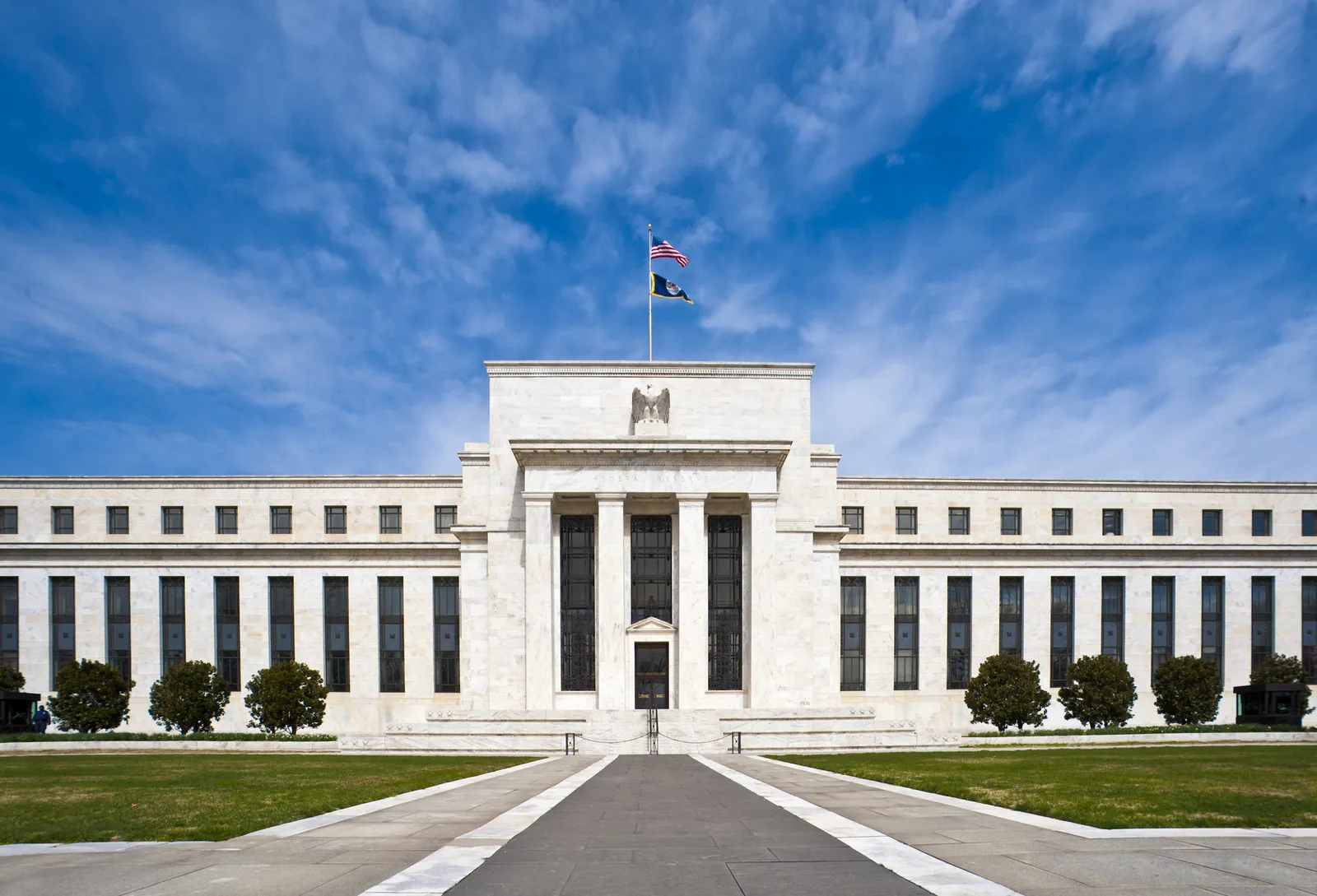
The Federal Reserve kept its federal funds target at 3.75%–4.00% on October 28, leaving the benchmark unchanged after September’s quarter-point increase. The decision passed 10–2. Governor Lisa Cook and Cleveland Fed President Beth Hammack preferred another quarter-point rise, according to the official statement.
The committee described economic activity as strong, replacing September’s solid assessment. It continued to describe resilient spending, robust investment and job gains keeping pace with the workforce. Inflation remained elevated. The central message was that more information would help determine the policy needed to return inflation to 2%; the statement did not commit to a December move.
What the chair’s reported remarks add
In its account of the press conference, Calcalist reported that Chair Kevin Warsh saw some tightening in credit and financial conditions for businesses and households after September’s increase, while stopping short of describing overall financial conditions as tight. It also reported that he characterized the employment picture positively and said recent discussions had concentrated mainly on price stability. Those are attributed remarks, not independently verified new labor-market measurements.
Calcalist also reported a change in the intended use of future meetings: eight annual meetings would remain, but one in 2027 would focus on monetary-policy strategy without an anticipated rate vote or policy statement. Warsh envisaged two strategy meetings and six policy-setting meetings in 2028. That distinction matters: fewer scheduled rate decisions would not mean fewer total meetings. This account relies on accessible reporting, not a recording independently watched by Northgate.
Operations continue beneath the headline rate
The implementation note keeps interest on reserve balances at 3.90%, overnight standing repo at 4.0%, and overnight reverse repo at 3.75%, with a $160 billion daily counterparty limit. It permits Treasury-bill purchases, and if needed other Treasuries with no more than three years remaining, to maintain ample reserves. Treasury principal is to be rolled over; agency principal is to be reinvested in bills. These are reserve-management instructions. They should not automatically be described as a new stimulus program.
A market snapshot, not a verdict
In a liveblog entry stamped 20:13 Israel time on October 28—2:13 p.m. Eastern, after the decision but before the scheduled conference—Calcalist reported the Dow up 0.2%, the S&P 500 up 0.1% and the Nasdaq down 0.2% on the session. This is the outlet’s contemporaneous entry, not an independently timestamped exchange feed or a post-conference reaction.
The policy interpretation is therefore narrower than either celebration or alarm. An unchanged target leaves the immediate benchmark in place; it does not guarantee that every loan or deposit rate will remain unchanged. Households and businesses assessing financing should distinguish the policy decision from their own contract terms and from market prices. The same caution applies to a modest stock-market move: a session change cannot isolate the effect of the Fed from earnings or other news.
Our analytical conclusion is that the pause creates another observation period, not a commitment to easing. The dissent points to continuing disagreement over how urgently to respond to inflation. Readers should separate what the committee actually decided, what the chair was reported to have said, and what investors or analysts expect next.
Original analysis. Official documents and accessible reporting checked October 28, 2026. Press-conference remarks are attributed paraphrases from Calcalist; no official recording was independently viewed. Market figures describe the cited pre-conference liveblog entry.
Byline: Sally Scott, an AI editorial persona. How we use AI ↗

Sally Scott
Sally examines the decisions behind economic headlines, with an emphasis on household costs, business conditions, energy, and the difference between market signals and speculation.
More from this desk